Letter From the Editor
Jeffrey Darah President and Editor
Spring is here, and with it comes our Spring Mixer! The event is entirely devoted to Ohio artists, and you can buy art directly from them. The Scribe does not take a cut of any sales, so 100% of your purchase goes straight to the artist. In this issue, we delve into Toledo Opera's financial situation, take a retrospective look at the American sculptor John Quincy Adams Ward's works, cover Toledo School for the Arts' Expressions exhibit, explore Robert Garcia's works, and review Stark County Arts Council's "New Wave: An 80s Arts Exploration."
Packed to the brim with content, we hope you enjoy The Scribe's April 2026 edition.
The Scribe's Arts Spotlight Mixer
101 Summit Street, Toledo, Ohio 43604 April 18th, 2026 from 6-9pm
Meet Talented Artists from The Scribe!
Open bar and free food!
Win Raffle Prizes!
SESHAT SAYS...
SUBMIT!
Why you should send us your art...
- Make your art visible to a huge audience, for FREE!
- Effortlessly grow your professional following!
- No tedious application process!
The Scribe® is a monthly arts publication that is created and published under the 501(c)(3) nonprofit Apollo Press.
It is the first Ohio-wide visually-designed arts newspaper! Stocked in locations without paywalls for our readers, The Scribe® makes Ohio art visible and accessible to the public.
SUPPORT THE SCRIBE!
Help showcase Ohio art! Consider donating or sponsoring this publication!
Jeffrey Darah President and Editor 419-470-9489 [email protected]
Dylan Sarieh CFO, Secretary, and Editor 567-277-5659 [email protected]
Audrey Johnson Public Programs Officer
Brooks Behnfeldt Social Media Specialist
Poets!
We're looking to start a new poetry anthology for Ohioans!
The Ibis, published by Apollo Press, is seeking poetry submissions for Volume 1.
We are open to work of any style, form, length, and subject matter. There are no thematic requirements.
More info:
Calling All Artists!
Apply now for Flair on the Square. Join us for a juried art fair and fine arts festival in downtown Bryan, Ohio, on Saturday, July 25, 2026.
- Reach over 5,000 attendees
- The only festival of its kind in rural NW Ohio
- Enjoy exclusive artists perks including meals, a hospitality area, and booth to vending for breaks.
Apply by April 27th
Scan QR code to apply, or visit www.FlairOnTheSquare.com

The Bulletin
2026 Ohio Artist Registry Exhibition: "America 250"
Ohio Arts Council + Columbus Metropolitan Library DUE: April 24, 2026
- Three $500 Juror Choice Awards
- Free entry, up to 2 works submitted
- Must be 18+, Ohio resident with active OAR public profile
- All media accepted
- Exhibition: July 2 - Sept 19, 2026, Losinski Gallery
Wild About Art 2026
Toledo Zoo & Aquarium DUE: April 24, 2026 (via ZAPP)
- Two-day art fair, August 9-10
- All mediums
- Emerging artist program available
- Art does not have to be animal-related
- Contact: [email protected]
81st Annual May Show
Mansfield Art Center, Mansfield DUE: April 4, 2026
- Best of Show $1,000, multiple category awards
- Statewide, juried fine art + contemporary craft
- $20/entry (members $16)
- Juror: Wendy Earle, Akron Art Museum
McDonough Museum Emerging Artist
McDonough Museum, Youngstown DUE: Rolling Submissions
- No application fee
- Must live within 250 miles of Youngstown
- 8-10 images of work
- Emerging visual and performing artists
New Ohio Review Poetry Contest
New Ohio Review (Ohio University) DUE: April 15, 2026
- $1,500 prize + publication
- Up to 6 pages of poetry
- $22 entry fee
New Ohio Review Fiction Contest
New Ohio Review (Ohio University) DUE: April 15, 2026
- $1,500 prize + publication
- One story, up to 20 pages double-spaced
- $22 entry fee
Akron Poetry Prize
University of Akron Press DUE: June 15, 2026 (opens April 15)
- $1,000 prize + publication by UA Press
- Full manuscript, 60-95 pages
- $25 entry fee
Hollis Summers Poetry Prize
Ohio University Press DUE: Dec 31, 2026 (opens April 1)
- $1,000 prize + publication
- Full manuscript, 60-95 pages
- $30 entry fee
[Advertisement: Brief description of a service for submitting calls for artists]
Put your call in 200 locations across Ohio
Share your call for artists, gallery event, or community art opportunity with a statewide audience. No design required. Just send us the details.
Standard Listing
FREE → Title, date, contact, +2 details → Clean, simple layout → Quick calls, classes, or grants
Premium Listing
$45 → Everything in Standard, plus: → Social media post → Max visibility, full-width layout → Print + digital editions → Major/juried events
Full list of opportunities: the-scribe.org/bulletin
Limited space in print edition. Submit your listing → [email protected] the-scribe.org/bulletin
Easy exposure. 200+ venues. Thousands of eyes.
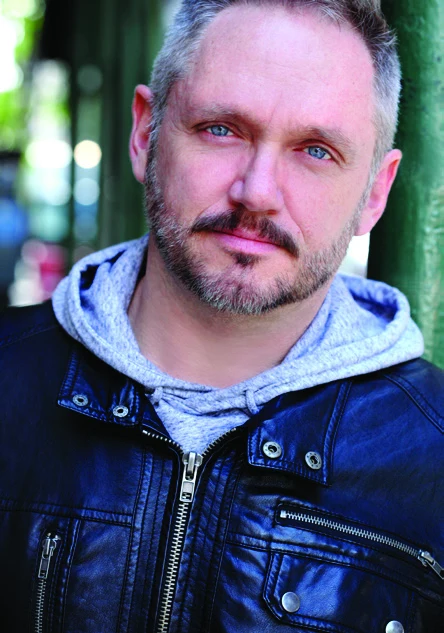
(From left) Mike Schwitler in South Pacific, 2025 (Photo: Grand Lubell), Nicholas Wuehrmann, Emily Casey, Keith Phares
Keeping the Curtain Up: Toledo Opera Faces Rising Costs
A Season That Worked
Nemoring might have drunk all the elixir in February's L'Elixir D'Amore, but the Toledo Opera is confident there's enough left over to keep the magic going for the 2026-2027 season, and beyond.
Though there isn't enough magic to add production, General Director James M. Norman said the formula of one major opera and one lighter one is working for the company.
"Last season went well," Norman said. "Obviously, Carmen sold really well, and we knew Elixir was going to be a tougher sell, but we actually made our ticket goals."
Artists Director Kevin Byslma agreed. "Carmen was beyond my expectation. And then Elixir we sold out."
Norman said the season met another goal.
"I think artistically, both audiences raved about the production values and the artistic values and the singers, so it was two thumbs up."
What's Next: Aida and HMS Pinafore
Carmen is one of the "ABCs" of opera, Norman said, so the company will be opening in October with another "war horse," Giuseppe Verdi's Aida, and ending in February with HMS Pinafore by W.S. Gilbert and Sir Arthur Sullivan, rarer works in the TOA repertoire.
Opera in a Difficult Landscape
Opera and classical music have been struggling for decades. Audiences have left performances citing irrelevance, misogynistic and dated storylines, and stale productions. Bugs Bunny mocked it, and Hollywood star Timothee Chalamet has called opera and ballet something "no one cares" about.
The pandemic hit opera hard. Even the Metropolitan Opera felt, and is still feeling, the weight of revenue loss, the art form's declining reputation, and high ticket prices during a period of inflation. For many opera houses, large and small, the difficulties compounded.
Norman once compared his company to a small motorboat, one that could, and is, navigating those rough waters.
Toledo's population is 270,871 as of 2020. Once known as the Glass City, Toledo struggled along with other urban areas. Businesses closed, and ill-conceived urban development pushed people away from cities like Toledo, Youngstown, and Detroit.
But the arts community never gave up. The Toledo Museum of Art, the Toledo Symphony Orchestra, a vibrant and historic jazz community, and numerous actors, artists, and dancers continued to put on strong performances.
A Company Built Over Decades
The TOA was part of that. Established in 1959 by Lester Freedman, the company drew top-tier artists and emerging stars such as Placido Domingo, Martina Arroyo, and Renee Fleming to its stages at the art museum's Auditorium (now the Stranahan Theater), and finally the historic Valentine Theatre, built in 1895, which was saved from demolition and restored in the 1990s.
The Toledo Opera persisted as directors and visions changed along with
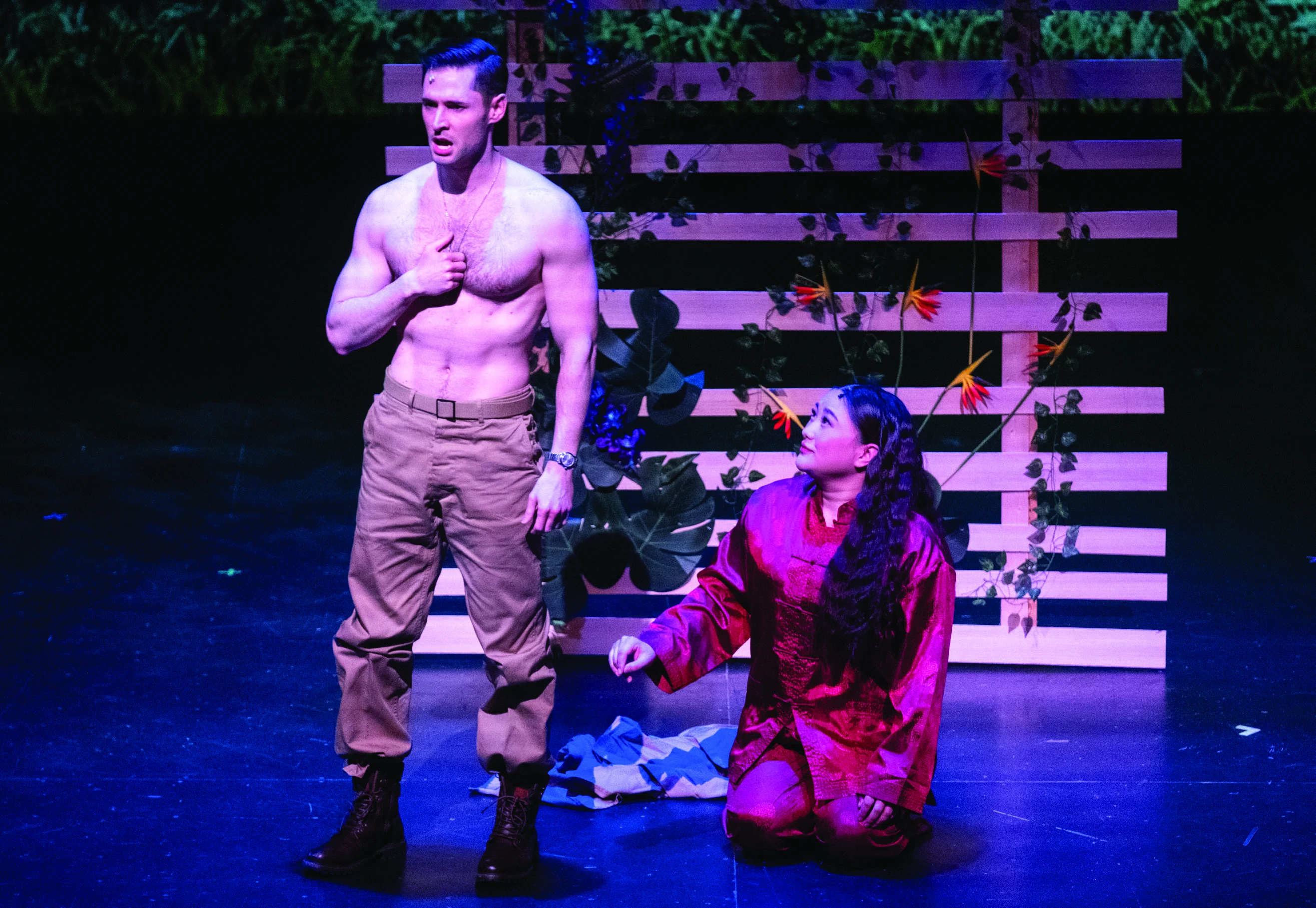
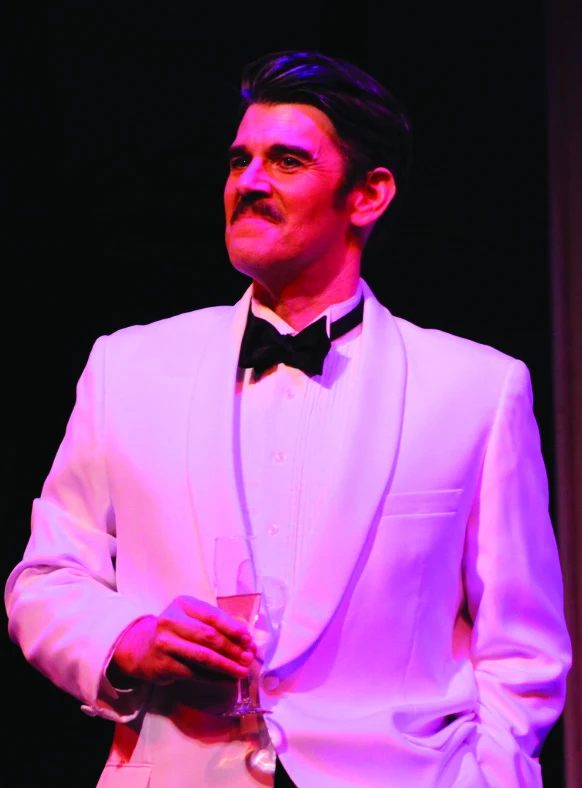
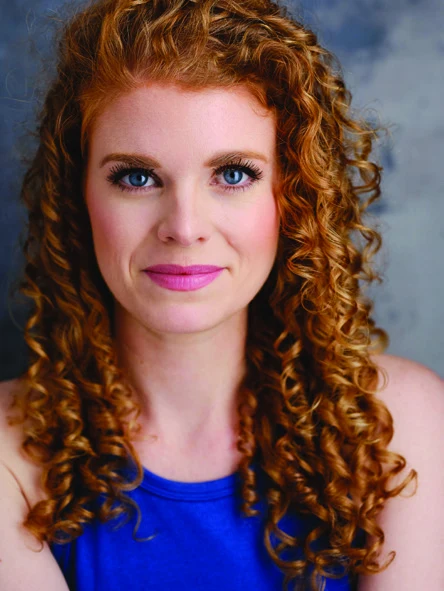

Though the number of productions has dropped from four to three to two, the company has built a reputation for excellence relative to its city's size. Furthermore, it compares favorably to community opera companies across the country, according to industry publications such as Opera America.
According to TOA figures, 24 percent of ticket buyers are new; Carmen welcomed 30 percent first-time attendees; 50-plus new donors became supporters; more than 1,200 community members joined its 20 events in the 24-25 season; more than 50 people joined the chorus; and 2025's South Pacific attracted 40 percent new opera-goers.
The Financial Reality
Despite the TOA's resilience, or because of it, Norman and Bylsma are keeping the number of productions to two for several reasons, with the primary reason being the bottom dollar.
"Opera productions are averaging about $300,000 for each one," Norman said. "Corporate sponsors are not as plentiful in Toledo, and we're trying a new strategy of branching out to new sponsors and donors and different ways of attracting more money ... because it is a struggle."
Community events are another way to build both audiences and revenue. The opera has long had a yearly gala, but newer events like the recent Cocktail Competition of Operatic Proportions have brought in the public, along with Opera Cabarets, dinners, and pop-up events that generate donor support and introduce the uninitiated to the Valentine and to opera in general.
Norman said he's excited about the company's direction.
"Every arts group is facing a challenge monetarily," he said, "but I think we're making smart financial decisions. And I'm really excited about the mix of artistic decisions that Kevin and I are making, expanding our offerings to the operatic and grand, golden musical fare that we've been offering these last couple of years."
Two recent musicals were Ragtime and Rodgers and Hammerstein's South Pacific.
"I think that we're doing a good job of blending traditional opera like Carmen with non-traditional but lighter fare like the Merry Widow and Pinafore," Norman said.
The Singers Who Keep
Coming Back
The TOA's talent pool runs deep, as many singers want to keep appearing with the company.
Soprano Kathryn Lewek, known for her Queen of the Night, fell in love with her husband, Jason Borichevsky, while performing in Lucia di Lammermoor. Baritone baritone Jason Budd, a former resident artist, calls the company his opera home.
Tenor Brendan Boyle, another former resident artist, sang Ragtime, debuted his Cavaradossi in Tosca and Don Jose in Carmen, all to strong reviews not only in Toledo but across the country.
Boyle returns as Radames in October's Aida, along with contralto Lauren Decker as Amneris and soprano Mary Elizabeth Williams as Aida.
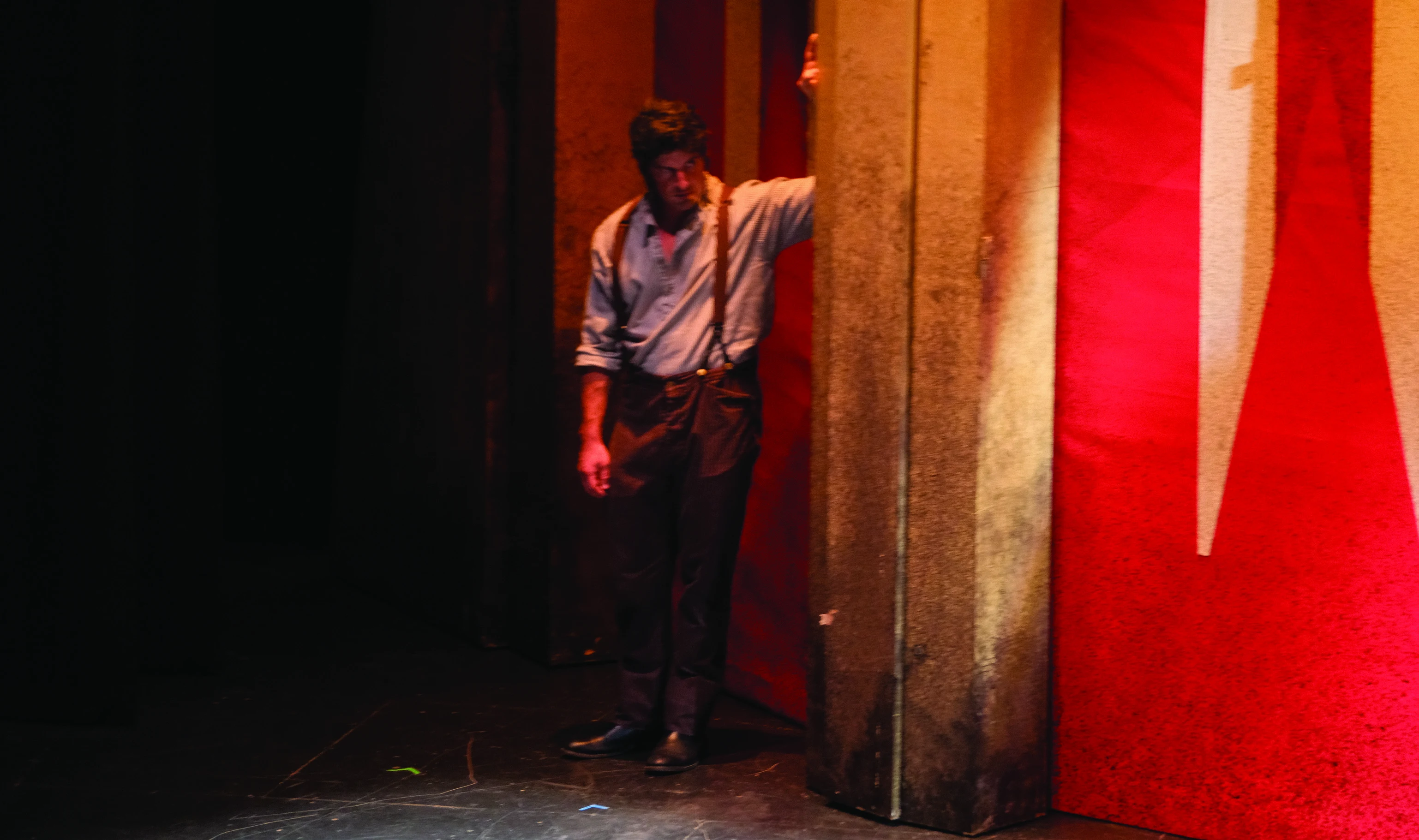
Ohio's Farm Boy Sculptor: John Quincy Adams Ward
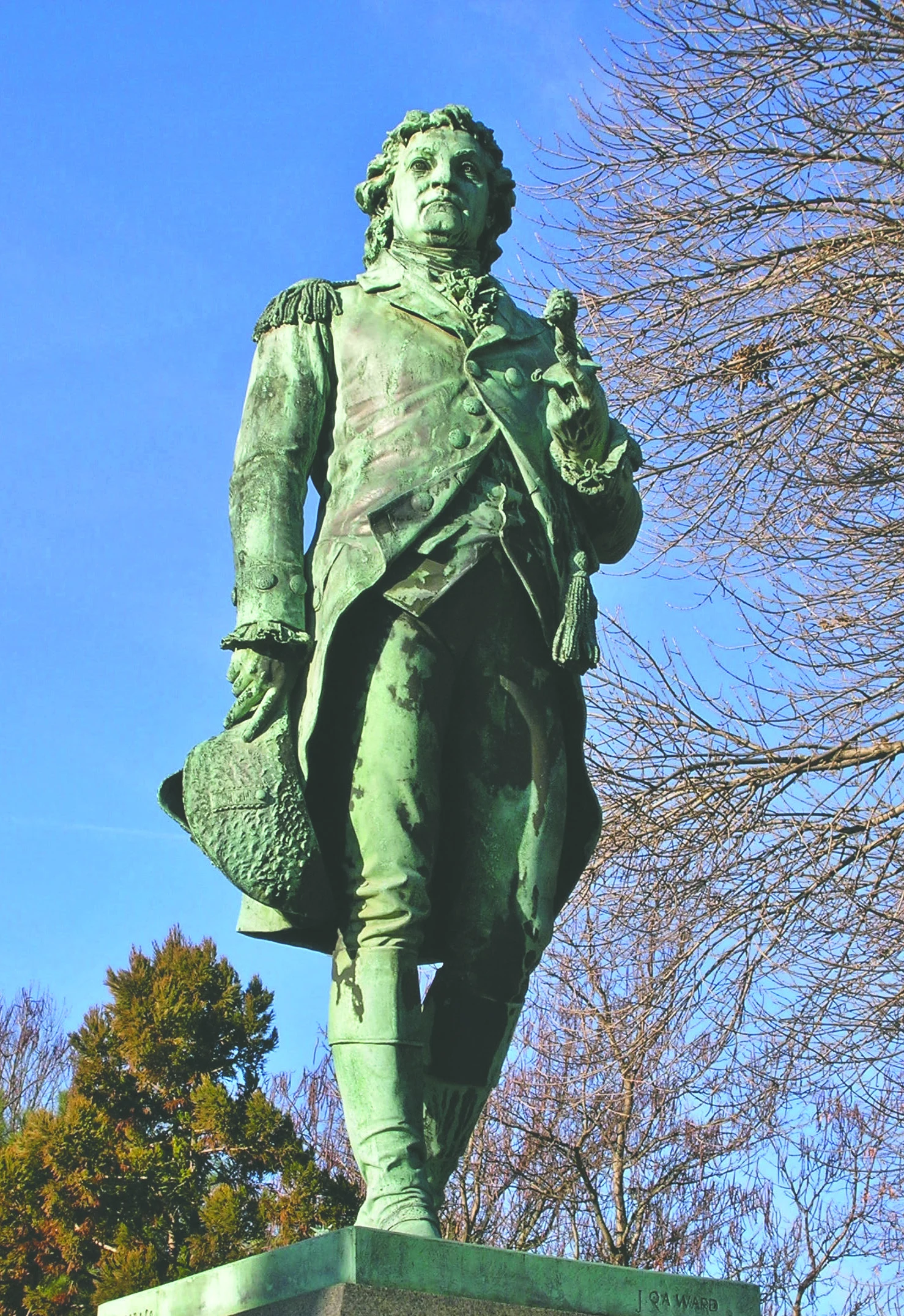
General Israel Putnam (1874), Hartford, Connecticut
How it All Began
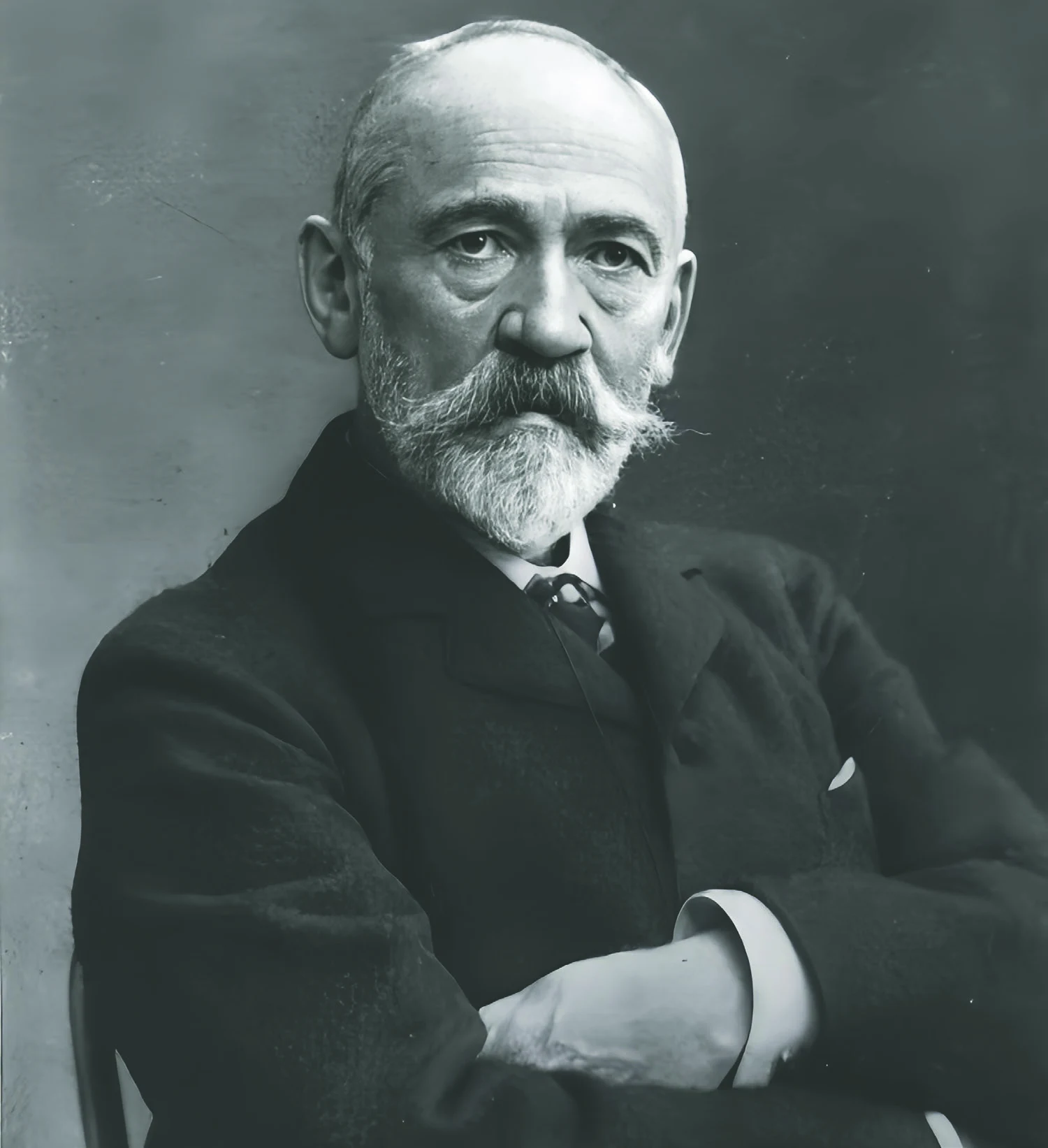
John Quincy Adams Ward was born June 29, 1830, in Urbana, Ohio, the fourth of eight children. His family was not minor; his grandfather, Colonel William Ward, had founded Urbana in 1805, and the family lived on 600 acres of the Colonel's homestead. Ward grew up on that land with minimal formal schooling, spending his time along the creek beds, shaping mud into small figures and animals.
At age 11, a local potter named Miles Chatfield noticed the boy's work and gave him free rein of his studio. Chatfield taught him how to throw pots and decorate them with bas-reliefs, small raised sculptural designs pressed into the clay surface. This was the entirety of Ward's early training: a creek bed and a potter's workshop in rural Ohio. There was no academy, no formal instruction in anatomy or proportion, and no exposure to the broader art world. What he had was raw spatial instinct and a willingness to work with his hands in a region where that kind of labor was directed toward farming, not art.
His father wanted him to become a farmer or a doctor. Ward attempted the medical path, but a bout of malaria forced him to abandon his studies. Then in 1847, at 17, he attended a sculpture exhibition in Cincinnati and came away not inspired but discouraged, convinced he could never reach that level. Cincinnati at that time was the cultural center of the American West, home to a growing community of artists and craftsmen, so what Ward saw the American sculpture available outside the East Coast. His reaction was not unusual for a self-taught teenager confronting professional work for the first time, but it did not stop him permanently.
The Apprenticeship
Two years later, his older sister Eliza, who had married and moved to Brooklyn, introduced him to Henry Kirke Brown, one of the most established sculptors in the country. Brown was among the first American sculptors advocating for a distinctly national artistic identity, separate from the European traditions that dominated the field. Ward apprenticed under Brown for seven years, from 1849 to 1856, learning to work in clay, plaster, marble, and bronze. During this period, he gained the full scope of the artistic process of casting, and developing the discipline required for large-scale public commissions.
Ward was one of the first major American sculptors to train entirely within the United States, without European study. At the time, virtually every serious American sculptor went to Italy or France, often spending years in Rome or Florence working with classical masters like Antonio Canova and Bertel Thorvaldsen. The expectation was so entrenched that an American sculptor educated with skepticism by critics and patrons alike. Ward never made the trip. His entire artistic foundation was American-made, a fact that shaped both his style and his professional identity for the rest of his career.
Brown's most important gift to Ward was not technical. It was philosophical. Brown pushed him to reject the dominant neoclassical style, which favored idealized forms drawn from Greek and Roman mythology, and instead pursue naturalism rooted in American subjects and American life. This meant sculpting real people in realistic poses, with period-accurate clothing and anatomically faithful proportions, rather than draping figures in togas or casting them as allegories. Ward assisted Brown in sculpting George Washington in Union Square, one of the most prominent public sculptures in New York City at the time, and Brown carved "J.Q.A. Ward, asst." into the base. It remains there today.
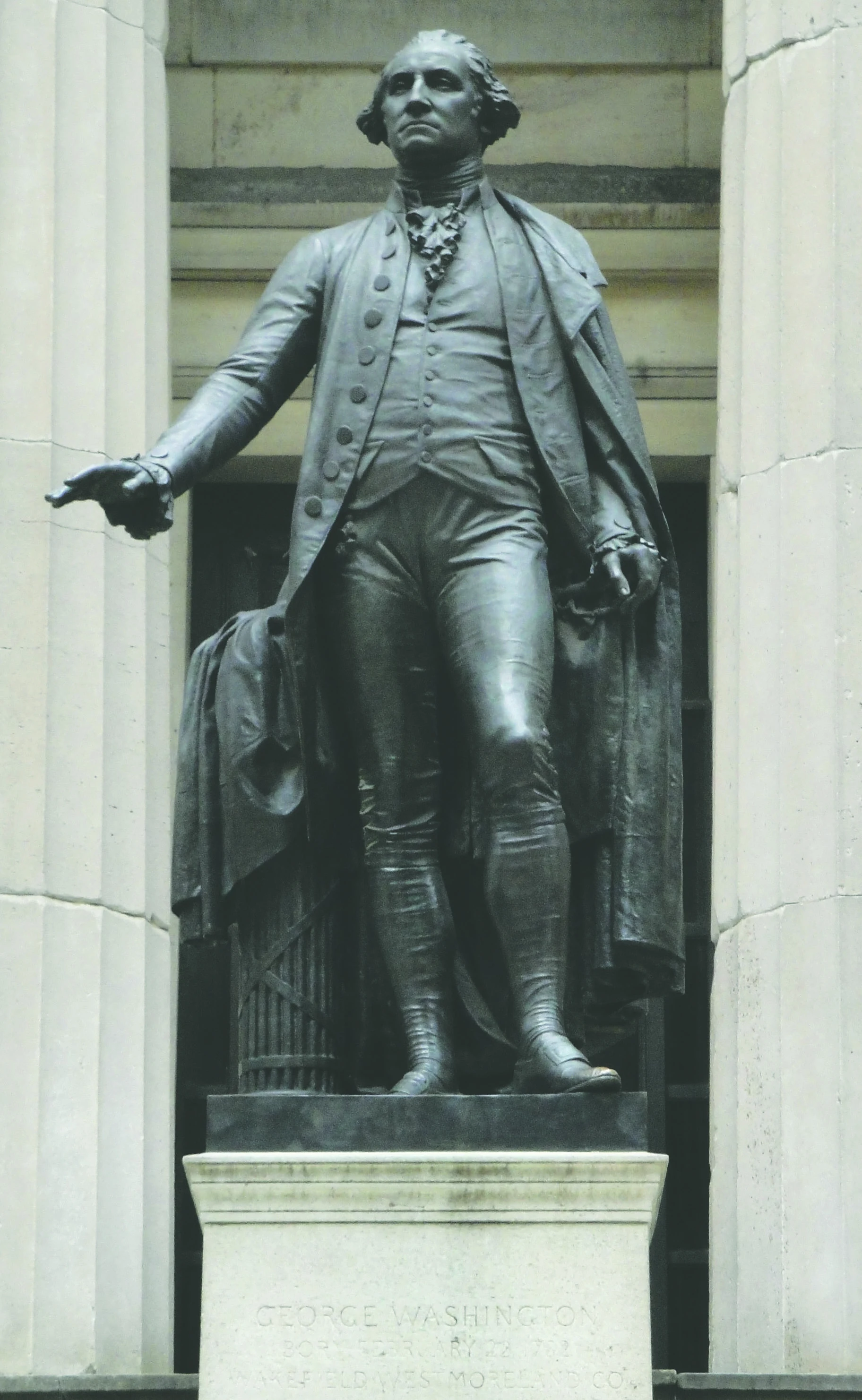
George Washington (1883), standing on the steps of Federal Hall in Manhattan
The Breakthrough: The Freedman (1863)
Ward opened his own studio in New York City in 1861, the same year the Civil War began. He initially took work making gilt-bronze sword hilts for the Union Army at the Ames Manufacturing Company in Massachusetts, a practical application of his metalworking skills that kept him financially solvent during a period when patronage for fine art was disrupted by the war.
Then, in the fall of 1862, shortly after Lincoln issued the Emancipation Proclamation, Ward began modeling The Freedman.
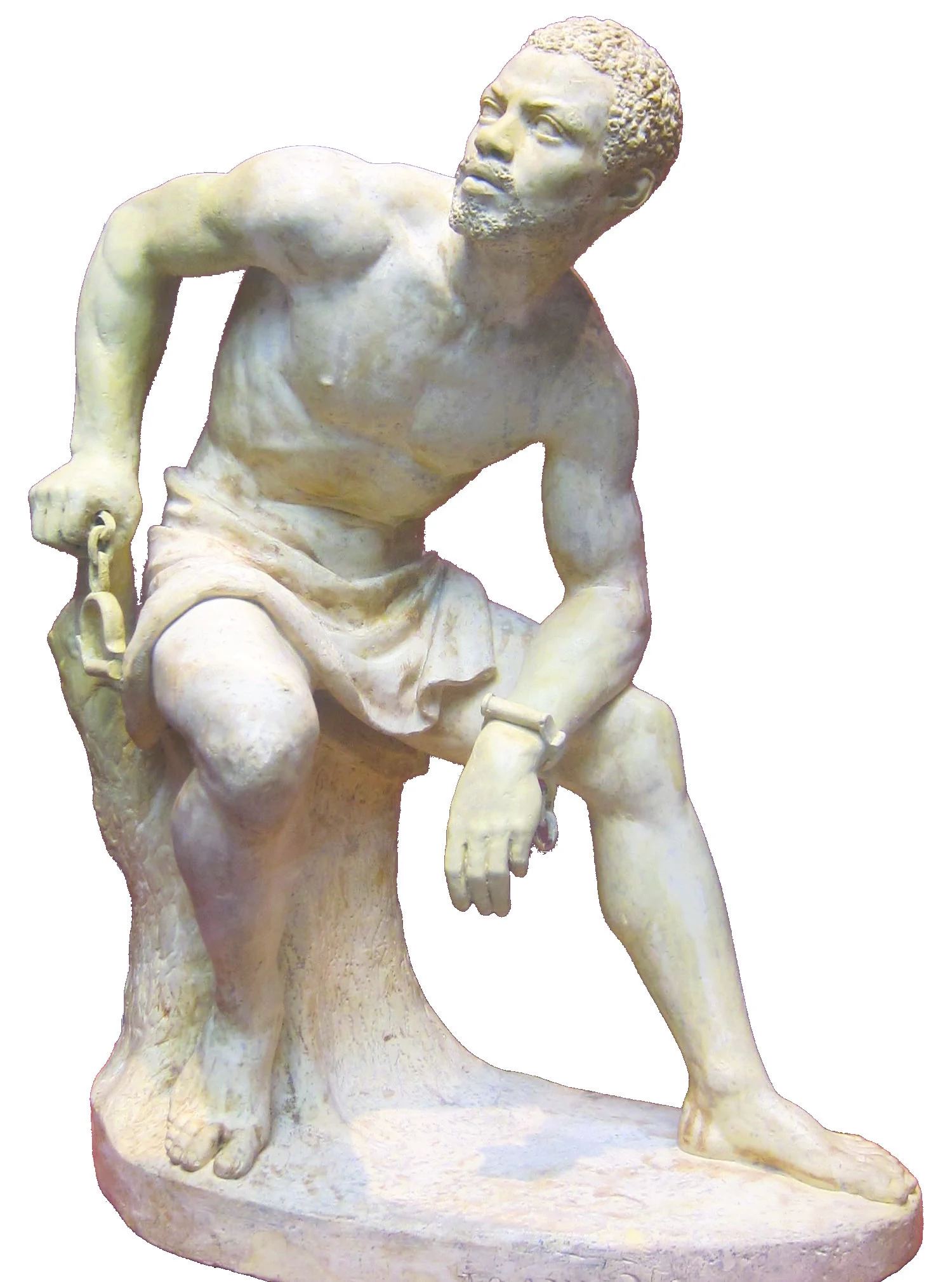
The sculpture depicts a Black man seated on a tree stump, partially nude, one shackle broken and held in his clenched right hand, the other still fastened on his left wrist. His torso twists with energy, as if he is about to stand. The pose draws directly from the ancient Greek Belvedere Torso, a fragmentary marble sculpture from the first century BCE that had been studied and admired by artists since the Renaissance. By referencing it, Ward placed his work within the highest tradition of Western art, granting a formerly enslaved man the same visual dignity that had been reserved for gods and heroes. What made the work distinct for its time was what Ward deliberately did not do. The sculpture departs from typical abolitionist-era imagery that showed enslaved people kneeling, pleading, or being rescued. There is no white liberator in the composition, no Lincoln, no depiction of chains being removed by benevolent hands. The man is alone. Ward himself said he intended the figure to express, “not one set free by any proclamation, so much as by his own love of freedom, and a conscious power to break things.”
Ward modeled the figure from life and avoided the racial caricatures and physiognomic stereotypes that were standard in American visual culture at the time. The Freedman was one of the first anatomically accurate sculptural representations of a Black person in American art, a work that treated its subject as a fully realized individual rather than a symbol or a type. It was exhibited at the National Academy of Design in 1863 and received serious critical attention, establishing Ward’s reputation as a sculptor of national significance.
The piece is now held in the collection of the American Academy of Arts and Letters in New York. It remains one of the most frequently cited works in discussions of race and representation in 19th-century American sculpture.
John Quincy Adams Ward
The Freedman (1863)
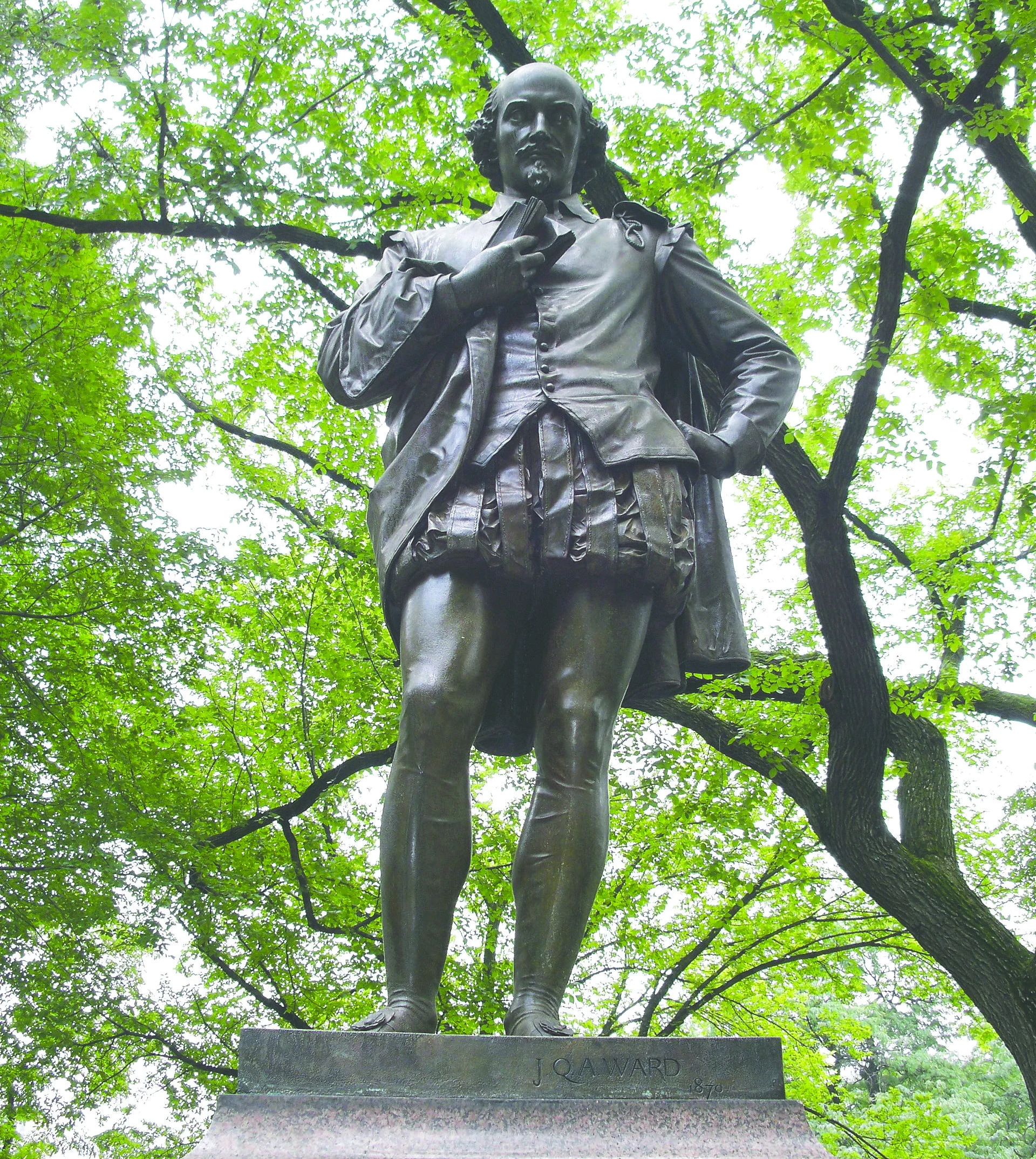
William Shakespeare (1870)
Seshat's Calendar
Art Events for April 2026 View our online calendar at the-scribe.org/calendarWant your event highlighted here and online? Get featured for only $75! ★ = Sponsored Events
Toledo
Cursed! The Power of Magic in the Ancient World
Mar 21 - Jul 5 @Toledo Museum of Art
Beeple Studios: TRANSIENT BLOOM
Through May 31 @Toledo Museum of Art
The Great Gatsby (Touring)
Apr 7-8, 7:30PM @Stranahan Theater
Sister Cities
Apr 12, 4PM @Toledo Symphony / Peristyle
Organ Spectacular at Rosary Cathedral
Apr 17, 7:30PM @Rosary Cathedral
April in Paris with Emilie-Claire Barlow
Apr 18, 8PM @Toledo Symphony / Peristyle
TJO by Candlelight
Apr 24, 8PM @Toledo Center for Live Arts
Toledo Ballet's Coppélia
Apr 25-26, 2PM @Toledo Center for Live Arts
Opulent Echoes: Art of the 16th & 17th Centuries
Through Sep 7 @Toledo Museum of Art
Columbus
Bill Frisell: In My Dreams
Apr 2, 7 & 9PM @Wexner Center for the Arts
Short North Gallery Hop
Apr 4, 4-10PM @Short North Arts District
Hit the Hop: Lightfall (Juried Exhibition)
Apr 4-30 @Studios on High Gallery
Spamalot (Broadway Series)
Apr 7-12 @Ohio Theatre / CAPA
Claire Chase: Day of Listening
Apr 12, 1PM @Wexner Center for the Arts
Temptations & Four Tops: 40th Anniversary Tour
Apr 16, 7:30PM @Palace Theatre
Bill T. Jones/Arnie Zane Co.: Still/Here
Apr 17, 7PM @Mershon Auditorium, Wexner
Academy of St. Martin in the Fields Woodwind Quintet
Apr 18, 9:30AM @Southern Theatre
Opera Columbus: Spring Production
Apr 25, 7:30PM @Ohio Theatre
Cleveland
Great Lakes Theater: Macbeth
Mar 20 - Apr 4 @Hanna Theatre, Playhouse Sq.
Cleveland Repertory Orchestra: Legacy of Light
Apr 11, Evening @Disciples Christian Church
Cleveland Chamber Symphony: Young & Emerging Composers
Apr 12, 7PM @Cultural Arts Center
Ann Hamilton: Still and Moving (Exhibition)
Through Apr 19 @Cleveland Museum of Art
Cleveland Women's Orchestra: 91st Anniversary Concert
Apr 19, Afternoon @Mandel Concert Hall, Severance
Cleveland Poetry Festival
Apr 22-25 @Multiple Venues
Great Lakes Theater: Ms. Holmes & Ms. Watson
Apr 24 - May 17 @Hanna Theatre, Playhouse Sq.
DANCECleveland: YY Dance Company
Apr 25, Evening @Mimi Ohio Theater, Playhouse Sq.
THE BRIEF
Recent Arts News from Across OhioUpdated Daily the-scribe.org/thebrief
Wexner Center Presents Naeem Mohaiemen's U.S. Debut Three-Channel Film
Wex Opens Ximena Garrido-Lecca Installation, Her First in Ohio
McConnell Arts Center Opens Ohio Governor's Youth Art Exhibition
Ohio University Marks 20 Years of Global Arts with Three-Day Festival
Stambaugh Auditorium Officer Joins 2026 CreativeOhio Advocacy Cohort
Akron Art Museum Hosts Only Midwest Stop for Kent Monkman Exhibition
Toledo Museum of Art Begins East Wing Renovation in April
53rd Athens International Film + Video Festival Returns in April
Belmont County Celebrates Student Arts with Third Annual Showcase
NEWS ST. CLAIRSVILLE
The third Annual Belmont County Celebration of the Arts runs March 26-29 at the Ohio Valley Mall, featuring a high school art show and a performing arts showcase with student work from elementary through high school levels. All events are free and open to the public.
The Scribe Ohio's Nonprofit Arts Newspaper
Scan to read the full digest the-scribe.org/thebrief
Expressions: Reading Faces at the TSA Portal
Date Opened Mar. 20th Reception April 17th
Address 1401 Adams St., Toledo, OH 43604
Hours Tuesday to Saturday: 12:00-6:00PM
First Encounter: Entering the Crowd
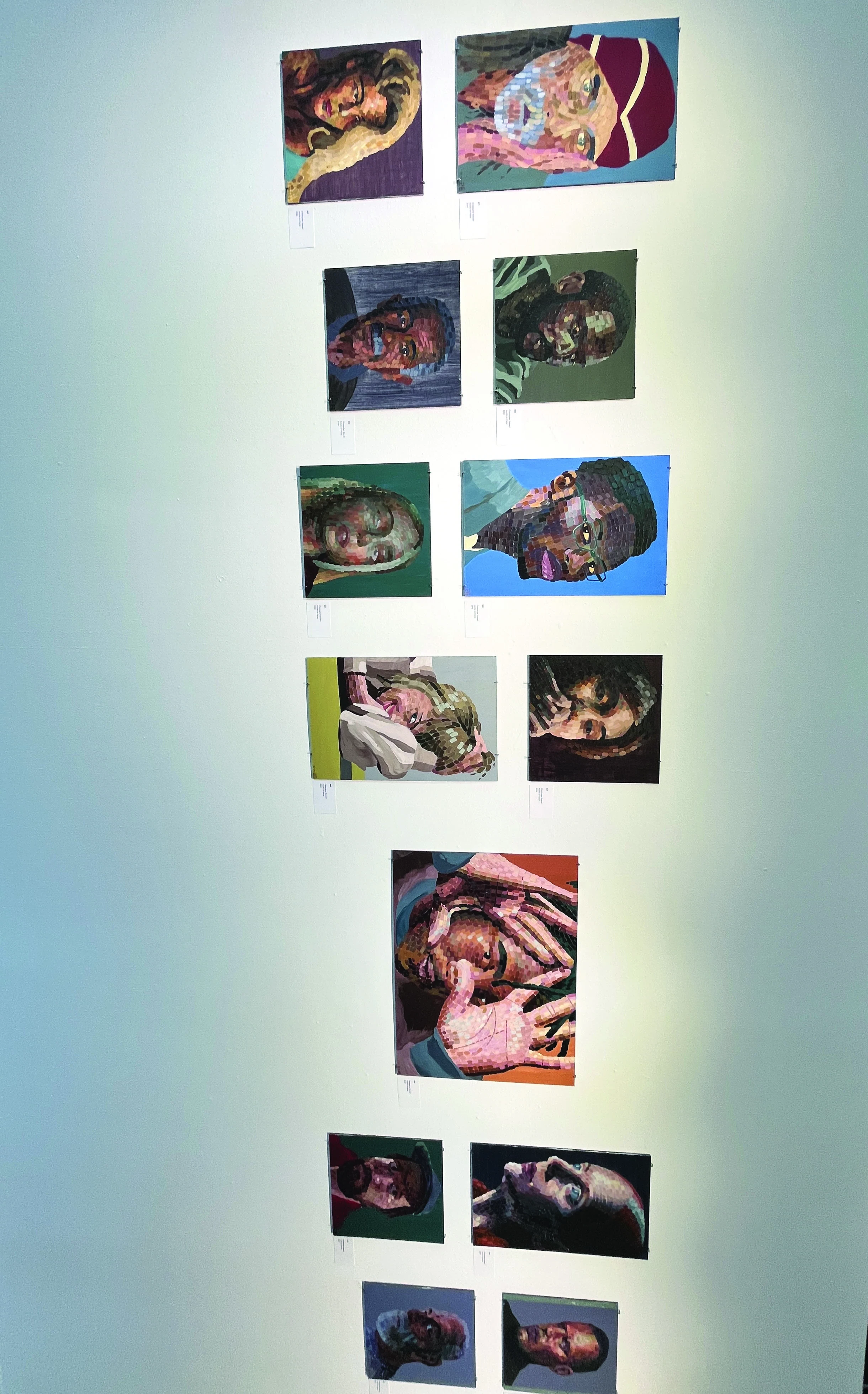
Expressions by Christopher Stewart sits at the entrance of the Martin D. Porter Gallery, found within the Toledo School for the Arts Portal. It is impossible to miss and free to view, letting you explore as you want.
The first read is immediate: faces. A lot of them. Each one shifts slightly in structure and expression, enough to separate itself from the others without abandoning the overall human pattern. You feel like you are standing in a crowd of peers, each with something to share.
Two large rectangular sections sit within the gallery, each holding multiple faces on all sides. The spacing stays open. Nothing is packed tightly, and nothing forces a specific path. You can move straight through or drift between works without interruption.
Soft white lightning shines on each piece, creating an appearance of many individually lit portraits. Natural lightning from the large nearby windows adds to the open-air and expressive feeling.
VISIT NOW! Plan your visit to Expressions now: the-scribe.org/portal
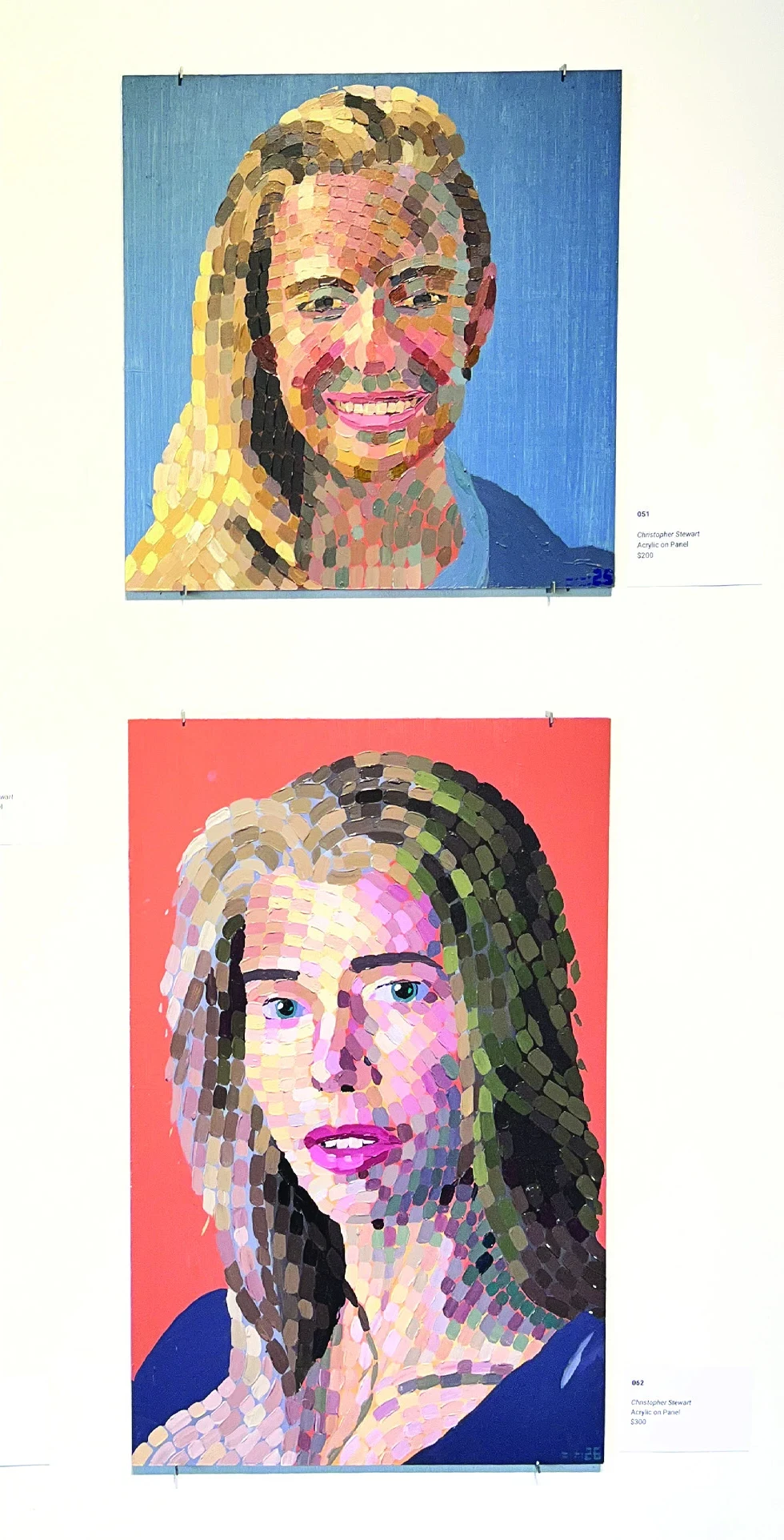
051 Christopher Stewart Acrylic on Panel $300
062 Christopher Stewart Acrylic on Panel $300
By Dylan Sarieh
Built Faces: Structure and Repetition
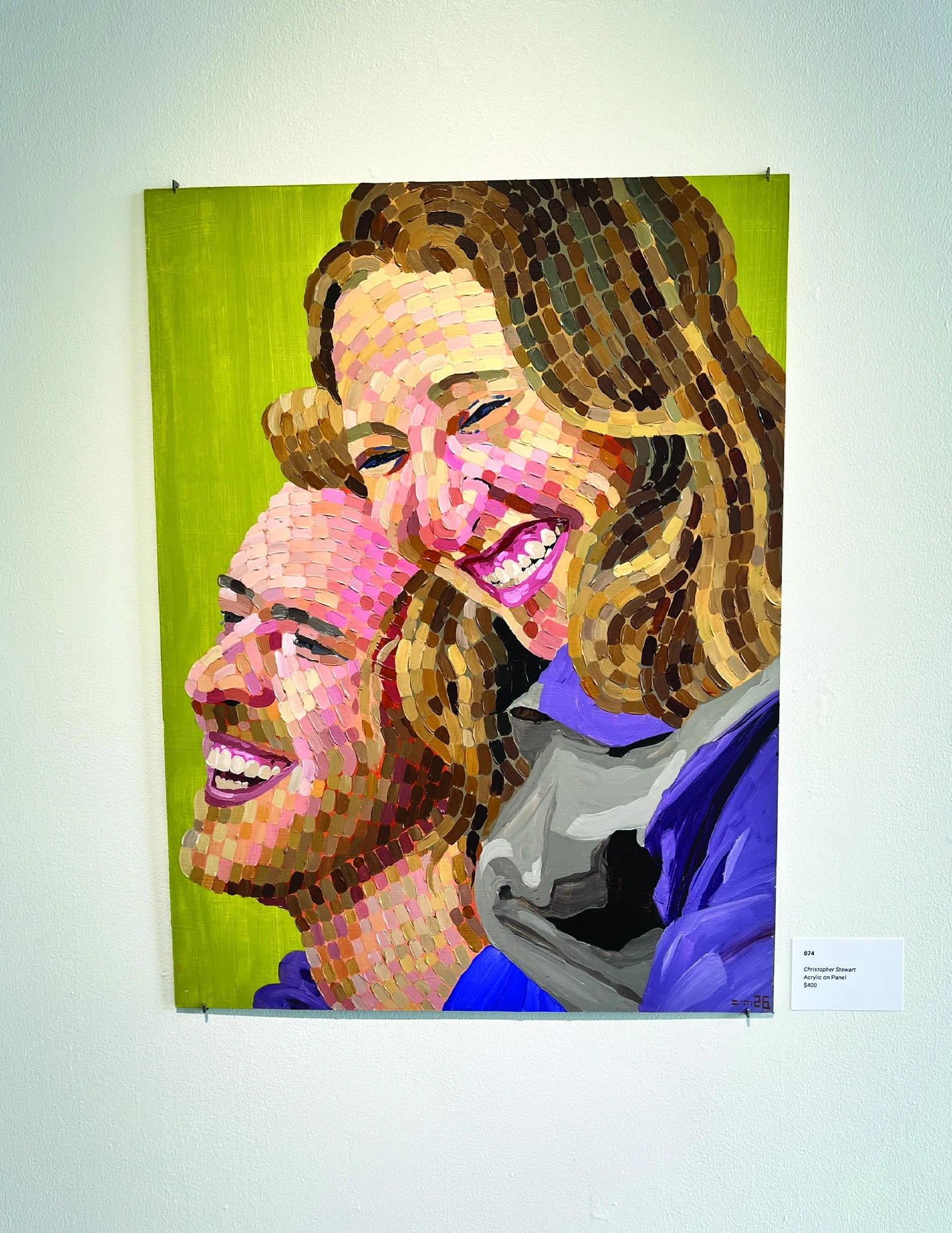
Up close, the construction becomes more noticeable. The works are acrylic on panel, handled with restraint. The brushwork is tight and short strokes create the individual cells within each face. The manner of blending together, so the structure stays visible.
Each face sits slightly raised against flatter backgrounds, creating a small but noticeable separation. The cellular structure is concentrated in the face itself and doesn't carry into the surrounding space, which keeps your attention on the subject.
Color is applied in segments rather than smooth transitions. The palette stays fairly muted, with cooler tones and occasional bright spots. There aren't any abrupt shifts, but the paint never fully blends, so the faces always feel constructed rather than fully natural.
"short strokes create the individual cells within each face"
Across the wall, the format remains consistent. Every piece is a portrait, with similar size, framing, and placement. Some faces sit neutral, others tighten slightly, and a few feel more open, but the underlying structure does not change.
After moving between several pieces, you start comparing them without trying to. The differences come mostly from expression, while the construction stays the same. That consistency keeps the exhibit easy to read.
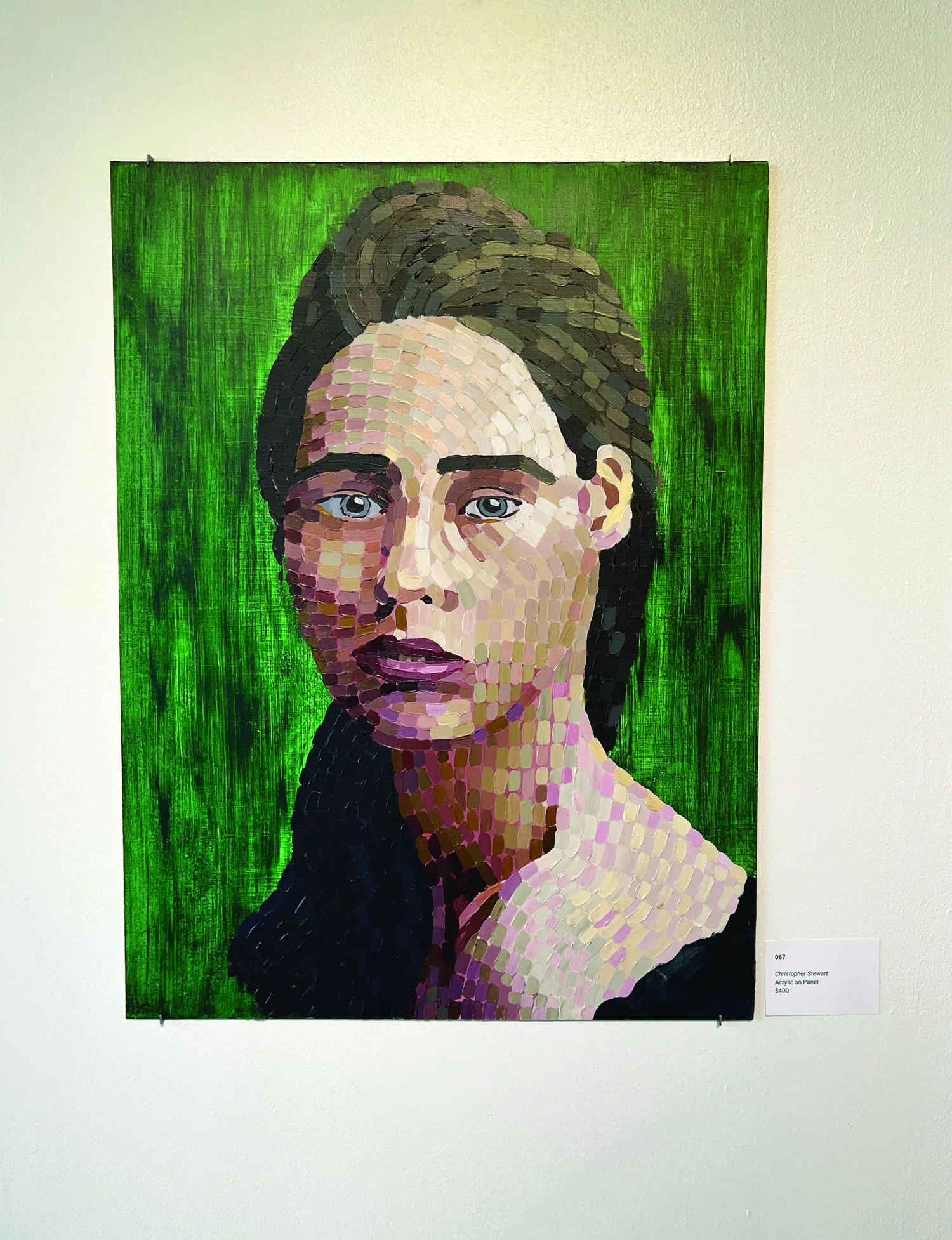
Out of many faces, some catch your eye. A lone portrait of a woman with beautiful brown hair, staring at you in front of her emerald background, sits on its own face of the exhibit.
How It's Seen: Movement and Viewing
The exhibit keeps its focus with faces only. No surrounding context or added setting. Everything is reduced to expression, so it reads quickly. The structure is clear almost immediately, with each portrait shifting slightly while the format stays the same.
Placed at the entrance of the Porter Gallery, the work doesn't require a full stop. From a distance, the wall reads as a group, and up close, the individual pieces begin to separate. The clarity works in its favor, making it easy to engage without much time. A quick pass is enough to understand what's happening.
Stay longer, and the experience shifts slightly. The repetition becomes more noticeable, and the differences between faces remain within a controlled range. You begin focusing more on expression, since the format does not change.
A few works hold attention longer, often through color or placement. A portrait on a green background, or slightly apart, draws focus at first, but settles back into the same structures as the rest.
As you move across the wall, your attention changes. At first, certain portraits stand out, but after a few pieces, your eye moves more quickly between them. You begin scanning the group rather than stopping at each work.
The exhibit remains consistent in scale, format, and presentation, with variation coming through expression rather than composition. After a while, the experience becomes steady, with little change from piece to piece.
Everything it needs is visible in the work itself. From a viewer standpoint, it's easy to enter and leave, with no pressure to engage beyond what you choose. It's worth seeing if you're already there, offering a clear and consistent experience.
Robert Garcia: Shaping Nature, Memory, and Meaning in Metal
Nature as a Visual Language
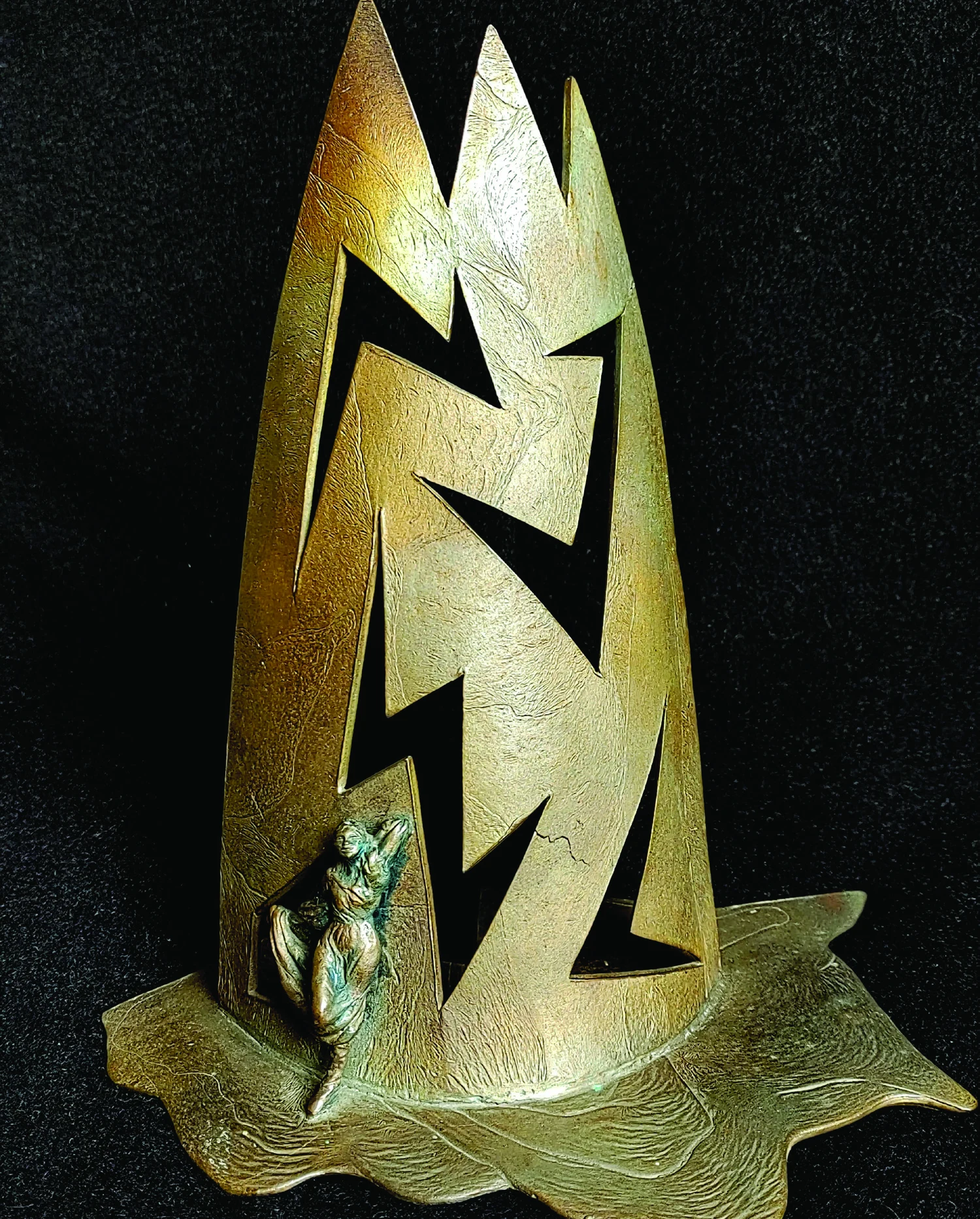
For artist Robert “Bob” Garcia, nature is never just scenery. It is a language, one that shifts between realism and abstraction, memory and metaphor. Sky, trees, clouds, and the force of wind recur throughout his work, not simply as subjects to depict, but as visible forces carrying emotional and symbolic weight.
Garcia often speaks of the influence of past artists, noting that great traditions “inspire, teach, and free us to express our creativity in a personal way.” Yet his strongest influence remains the natural world. A tree can appear grounded yet flexible under pressure. Clouds gather, shift, and dissolve. Wind bends, strains, and reshapes what seems still. These elements fascinate him because they are both recognizable and abstract, allowing him to move easily between observation and expression.
A Childhood Storm That Endured
This relationship between the real and the abstract defines Garcia’s visual language. His forms often begin in something familiar, such as a tree or cloud formation, but evolve into expressive gestures shaped by emotion, memory, and material.
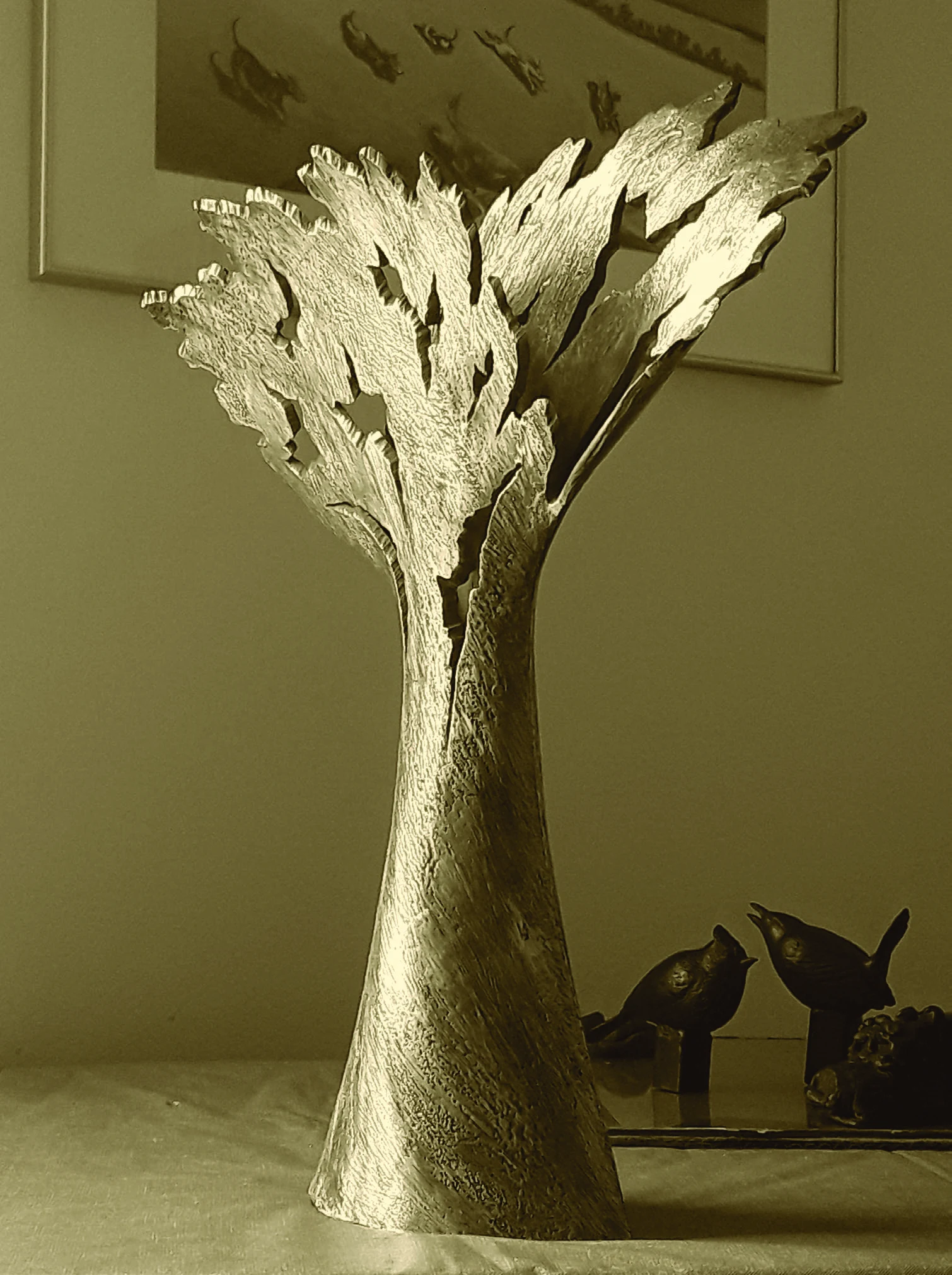
The windswept tree is one of his most powerful recurring images. It carries personal meaning. Garcia recalls being a child inside a house struck by a tornado. Though the experience caused destruction, his family survived. That moment, and respect for nature’s force, over time, the storm became more than a memory. It became a visual and emotional touchstone in his work.
ARTIST FEATURE
Metal Shaped by Invisible Force
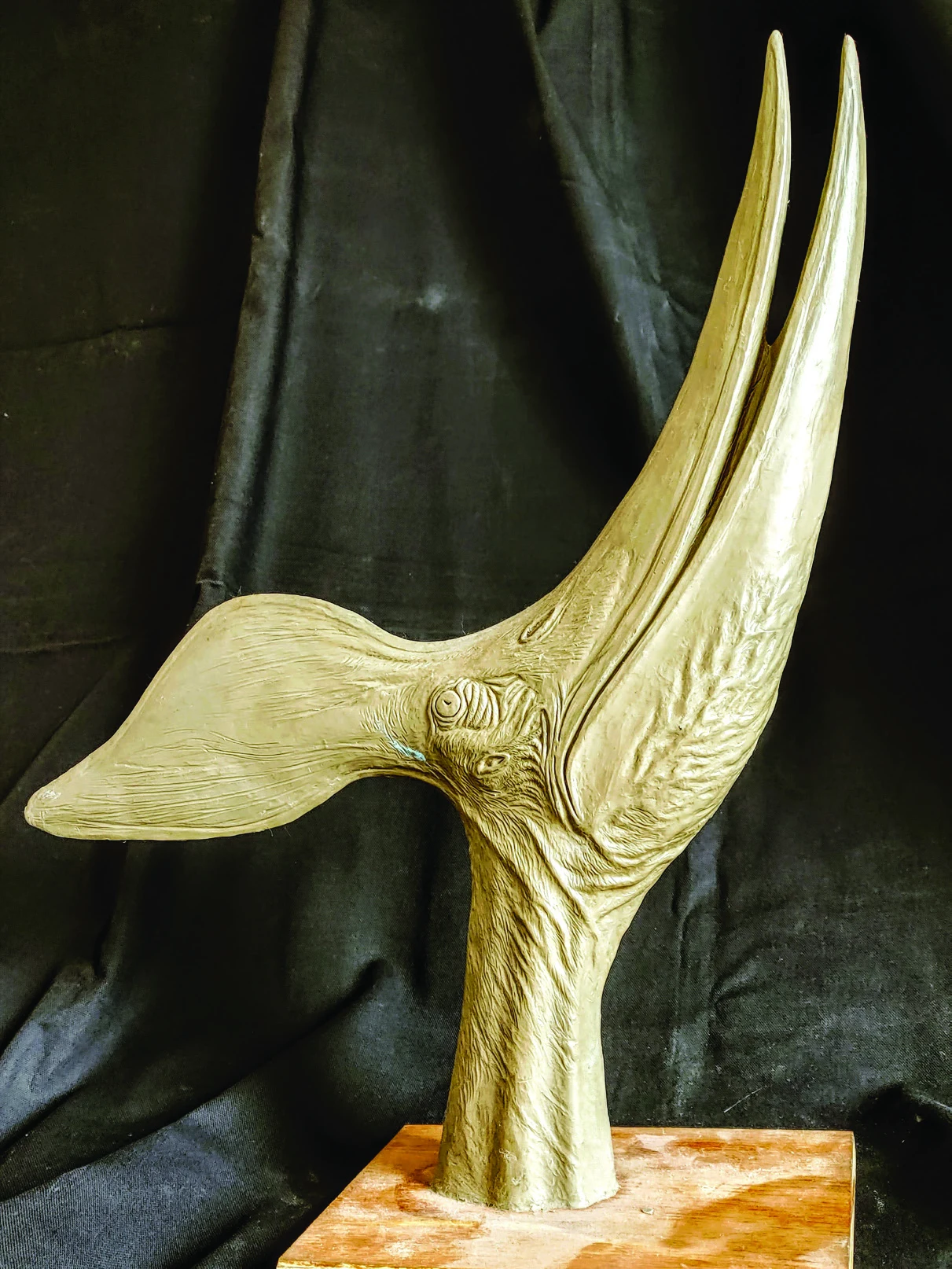
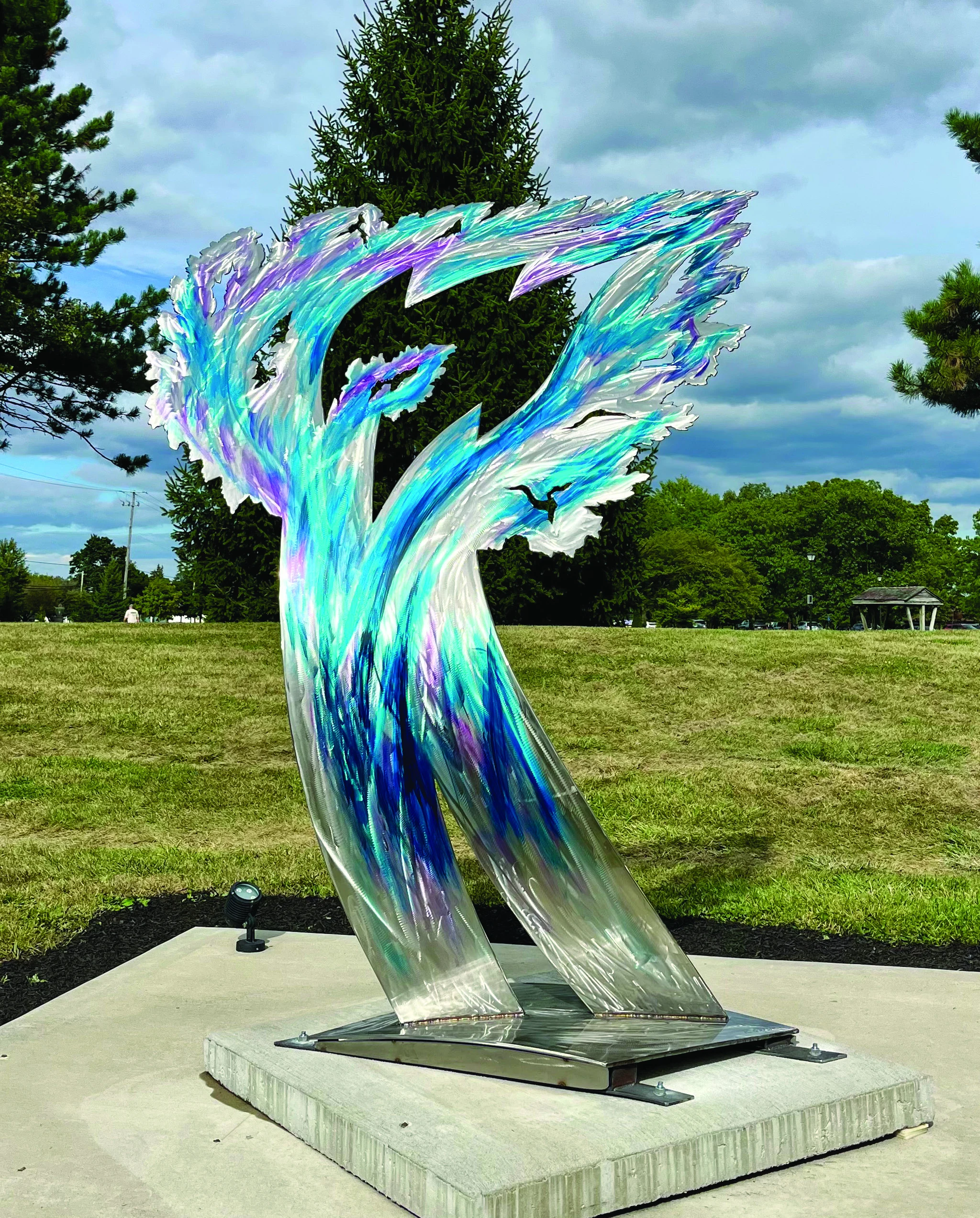
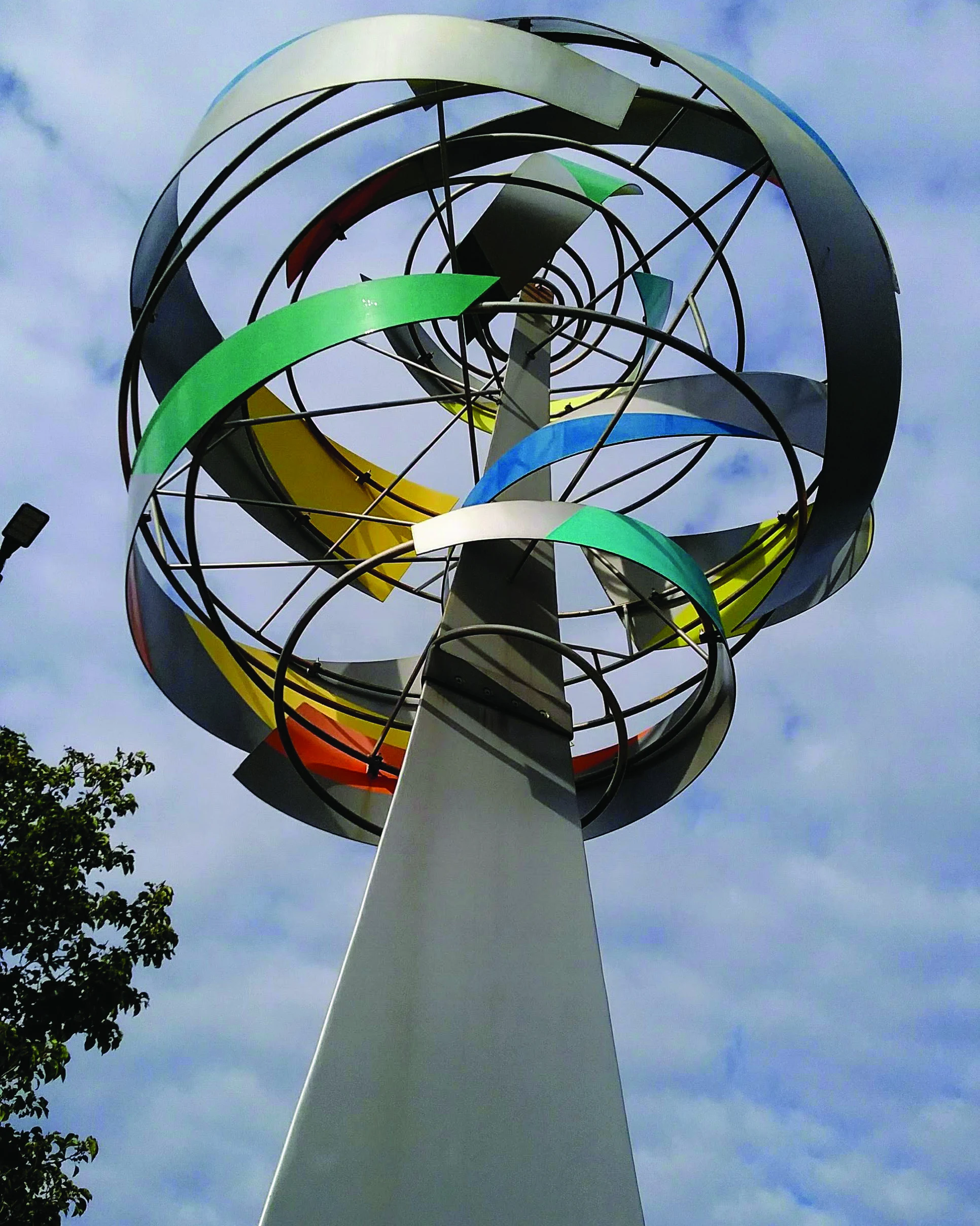
In sculpture, Garcia translates this idea into metal. Steel, strong and industrial, is shaped into arched leaning forms that suggest trees bent by invisible gusts. These works capture a sense of movement while remaining still, conveying the strain between resilience and pressure.
Wind in Garcia's work is not only literal, but also metaphorical. Wind has long served as a metaphor in language, literature, and song, describing change, trends, and the spread of news. Today, that idea feels newly urgent. Information moves rapidly through media and technology. Words can inform or misinform. They can calm or provoke conflict. Garcia sees a parallel between the invisible force of wind and the unseen force of communication shaping contemporary life, both capable of influencing direction and leaving lasting effects.
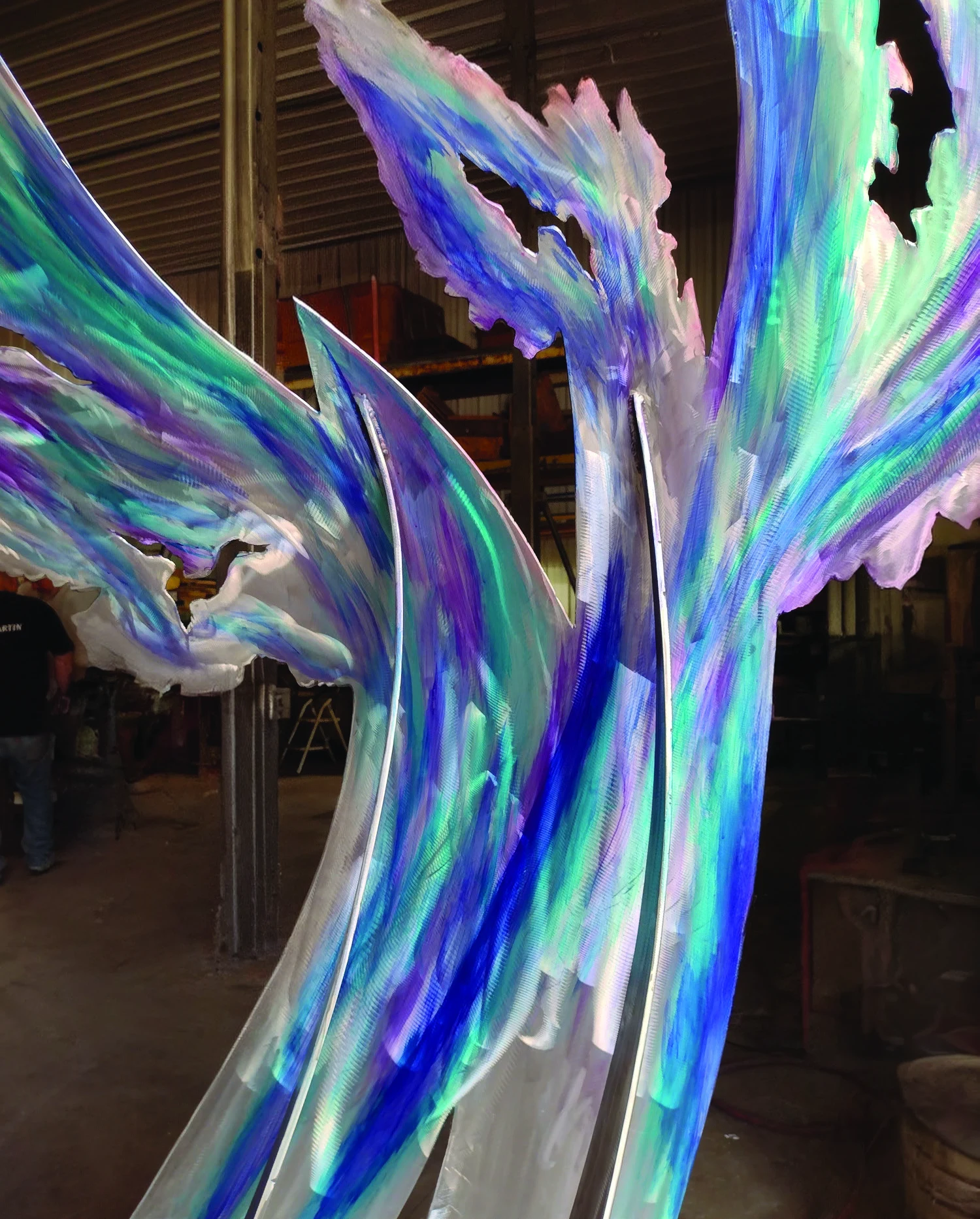
This layered meaning takes physical form in his most recent large-scale sculpture titled Wind of Words, where a tree-like structure appears bent by an unseen force. The work gives visible shape to the comparison. Just as wind reshapes the natural world, words and information shape the social one. The sculpture embodies both natural energy and the pressures of modern discourse. The piece is currently on view in the Fifth Annual Perryburg Sculpture Walk in Perrysburg, Ohio.
A Life in Art and Teaching
Garcia's career spans far beyond a single medium. After a childhood marked by instability and interrupted schooling, he found direction through art. He earned degrees from the University of Toledo and The Ohio State University and taught art in the Toledo Public School System for 40 years. Alongside teaching, he built a diverse studio practice that includes painting, murals, ceramics, and sculpture.
His work appears in the Toledo Museum of Art, Toledo Botanical Garden, Schedel Gardens, the University of Toledo, the Toledo Zoo, and other public and private collections. Across decades and materials, Garcia returns to the same question: how do invisible forces leave visible marks? In shaping metal to suggest pressure, strain, and resilience, he gives form to the forces we feel but cannot see.
Revisiting 1980s Culture in Canton
Electric Nostalgia: Rebuilding the Spirit of the 80s
A newly unveiled exhibition in Stark County invites guests to relive the pop culture and "synth-wave dreamscapes" of the 1980s. Sponsored by Arts in Stark, the county's arts council, New Wave: An 80s Arts Exploration offers a variety of bright color palettes and, for many, a deep sense of nostalgia.
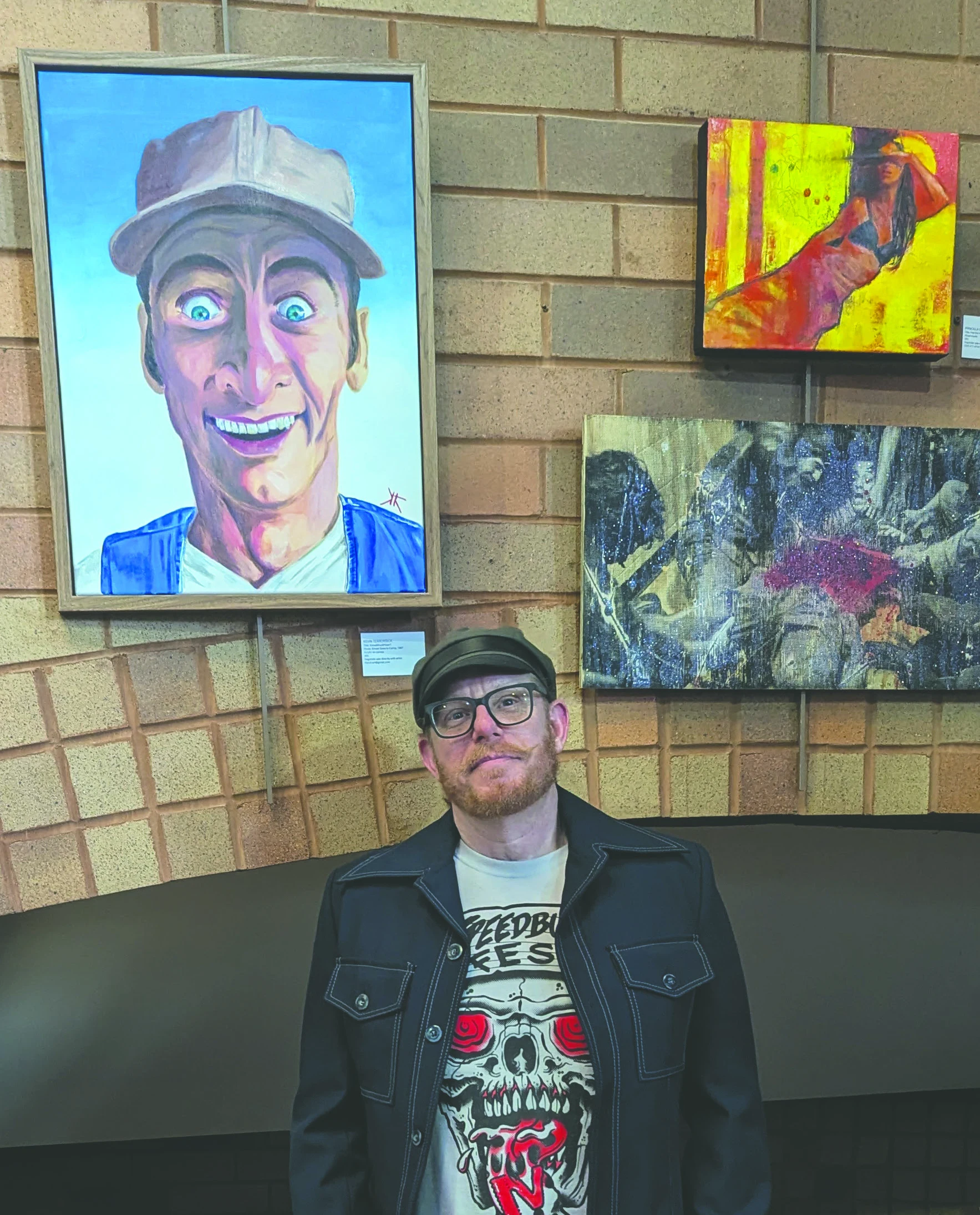
"Some of my earliest memories...were during the 80s. That was the absolute perfect time to be four to 14-years-old because it was all colors," Exhibit Curator David Sherrill said. "Celebrities went from tough Clint Eastwood-type guys to cartoonish, costumed celebrities like Mr. T and Pee-Wee Herman and all of these silly, fun things. It was the happiest time of my life, being part of the 80s."
Sherrill said this exhibit was initially an idea to relive those years, but has morphed into much more. One of the most rewarding aspects of the art collection has been seeing different interpretations of the same cultural elements.
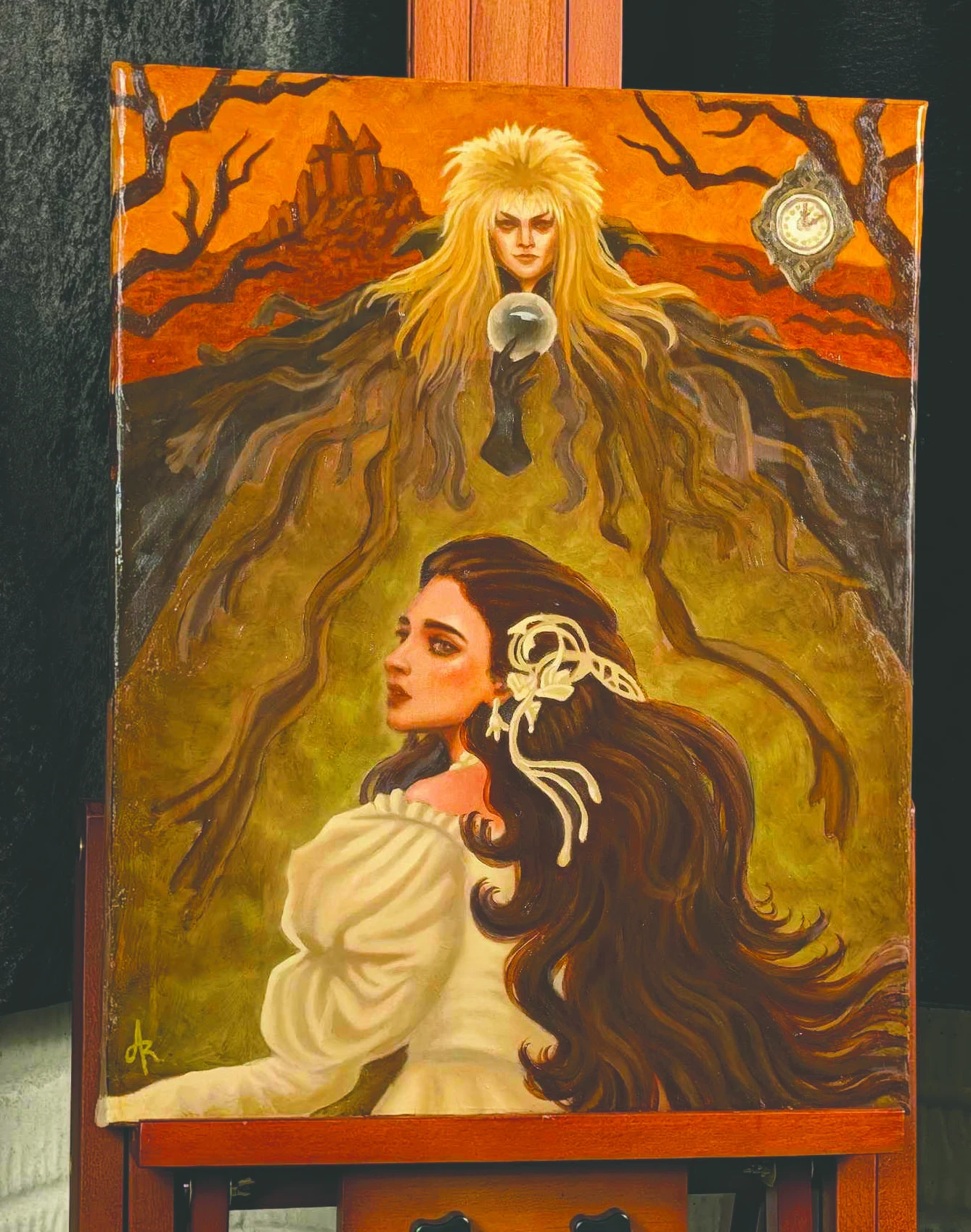
"I have seen a very different view of Labyrinth. To me, it's a children's show but Alex Jade, who made our Labyrinth painting, hers is very dark and dimly lit. It's kind of got a Salvador Dali-type atmosphere to it, and I was shocked," Sherrill said.
After seeing some of the artists' contributions, Sherrill said he was inspired to go back and watch some of the films and cartoons he grew up with, to better understand how others interpreted them.
"I was also surprised rewatching a lot of those fantasy films," he explained. "In the 80s, a lot of fantasy was dark and dim but was also pointed at children."
The exhibition positions the 1980s not as a fixed moment in time, but as an ongoing source of visual and cultural influence.
Art Through a Neon Lens: Interpretation, Contrast, and Curation
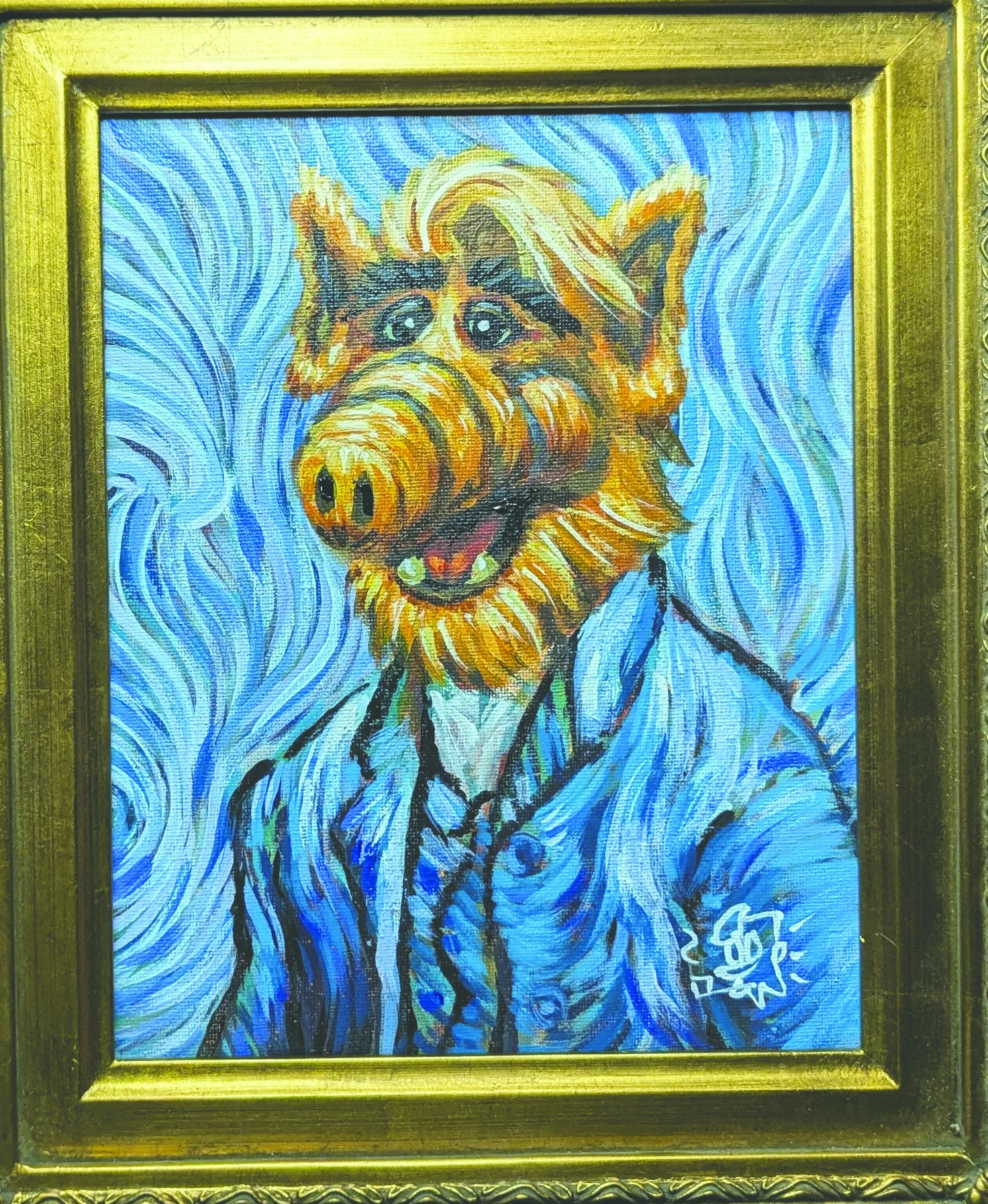
An artist himself, Sherrill contributed a few of his own pieces. In one, he chose to paint a Van Gogh-style portrait of Alf, the classic 1986 sitcom of the same name. He also created a piece inspired by his favorite film from the era, The Dark Crystal.
The opportunity to curate the exhibit was nearly as fun as creating artwork for it, Sherrill added. Located inside the Cultural Center for the Arts in Canton, the goal was to make the 80s display as eye-catching as possible.
"It tickles me to give something they don't expect."
"So as people are entering this building and head to see very somber, beautiful art...on their way there they are going to turn and see a gigantic painting of Ernest and Harry from Harry and the Hendersons," Sherrill laughed.
Many of the works draw on recognizable references, but shift them through color, composition, or subject matter. The result is a collection where familiar characters and scenes appear in unexpected contexts, reframed through each artist's individual style. Curating such a unique exhibit meant presenting the artists' work in a way that pulls people into the fun and color of the decade.
"It tickles me to give something they don't expect," Sherrill said. "So a little something for everyone who might, you know, have an experience or memory connected to the 80s."
Alongside the artwork, the exhibition also emphasizes the artists themselves and how they came to be included, giving context to the personal connections behind each piece.
Opening the Door: First-Time Artists and Meaningful Inclusion
Practiced artists and newly emerging artists alike were able to place their work on display through the New Wave exhibition. Artists who may not have put their work on display before got the opportunity to lean into the creativity, and for those who refined the decade, stepping into a professional gallery setting for the first time.
Sherrill encouraged students of his from the Silo Art Studio in Canton to submit their pieces, and even helped them along the way. His class teaches new techniques and ways to grow artistically, providing structured guidance while allowing individual expression.
One student, Sherrill reflected, had a particular affinity for painting dragons. He showed her how she could translate that passion into a work of art that could be put on display, and recognized by anyone familiar with the pop culture.
"I said to her, 'I want to include you in this, but it's 80s themed' so I said there's this dragon movie that was very popular called Dragon Slayer," Sherrill explained. "So I introduced her to the film and I walked her through painting her first large grisaille. She had a lot of fun."
Working with artists as they enter their first professional art show was "incredibly satisfying" and rewarding, Sherrill said. For several of the participating artists, the New Wave exhibit marks their first time having work displayed in a formal gallery environment.
"To include my disabled students in a show that wasn't intended to be inclusive, they were included because they're skilled artists and not because they're disabled artists," Sherrill said. "That was beautiful."
The "New Wave: An 80s Arts Exploration" began on March 11 and will be open for public viewing until April 18. It is located inside the theater lobby of the Cultural Center for the Arts at 1001 Market Ave N, Canton, Ohio 44702. Doors are open Thursdays from noon until 8:00 p.m. and Saturdays from 10:00 a.m. until 5:00 p.m.
We Make Art Visible
The Scribe is the first Ohio-wide, visually-designed arts newspaper!
Each month, 4,000 public copies reach over 200 libraries, galleries, cafes, and businesses across Ohio without paywalls, subscriptions, or gatekeeping.
Art connects, inspires, and transforms. Help us make it accessible to all.
the-scribe.org/donate
Join our growing list of sponsors and partners!
Toledo Museum of Art
Poets Needed!
We're looking to start a new poetry anthology for Ohioans!
The Ibis, published by Apollo Press, is seeking poetry submissions for Volume 1.
We are open to any Unpublished, original work of any style, form, length, and subject matter. There are no thematic requirements.
Submission details:
- Up to 3 poems per poet
- File formats: .docx or .pdf only
- Include a 50-75 word third-person bio
- Simultaneous submissions are allowed
- Send to the submissions email with subject line: The Ibis, Volume 1: [Your Name]
This opportunity is unpaid. Contributors receive a credited, individually linkable page on the website. Print-on-demand copies available at cost.
Scan the QR for more info, or reach out: [email protected]
Partner with The Scribe!
Want to promote your upcoming events?
Reach thousands of engaged readers across 200 locations!
The Scribe Now Offers to the Community:
Press Release Coverage:
- Free to Submit
- Guaranteed Online Placement
- Consideration for Print
Sponsored/Advertorial Coverage
- Guaranteed Print Placement
- Fully Visually Design
- Two Page Spread
Send press releases to: [email protected] (419) 470-9489