The narrative of Osiris is attested across several thousand years of Egyptian textual and artistic tradition. The oldest fragments appear in the Pyramid Texts inscribed in the burial chamber of Unas (c. 2375 BCE) at Saqqara. Later versions are found in the Coffin Texts, the Book of the Dead, and the Great Hymn to Osiris on the Stele of Amenmose (c. 1550 BCE, now held at the Louvre). The fullest narrative account is Plutarch's De Iside et Osiride (On Isis and Osiris), composed in Greek circa 100 CE, which synthesizes Egyptian priestly traditions. The account below follows Plutarch's narrative, supplemented by detail from Egyptian primary sources.
The Reign of Osiris
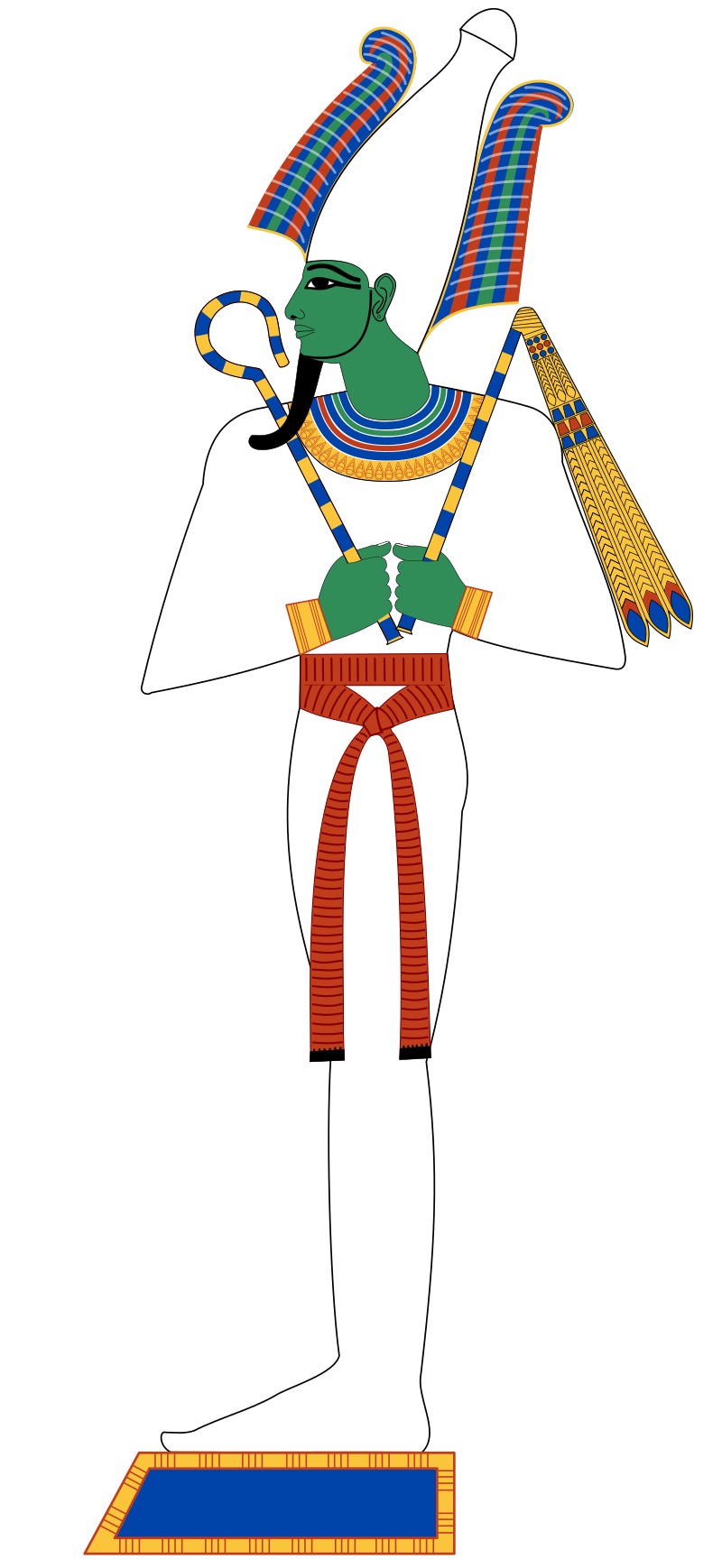
Osiris was the firstborn son of Geb, god of the earth, and Nut, goddess of the sky. His siblings were Set, Isis, and Nephthys. He ruled Egypt as its first divine king with Isis as his queen. According to Plutarch, Osiris taught humanity the practices of agriculture, established law, and instructed the people in the proper worship of the gods. He extended these teachings beyond Egypt by traveling to other lands, leaving Isis to govern in his absence.
The Great Hymn to Osiris, inscribed on the Stele of Amenmose, describes him as one who "placed order in the place of chaos" and "drove away evil." The Pyramid Texts address him as the ruler of the dead and the source of sustaining water, identifying him with the fertile inundation of the Nile.
The Conspiracy of Set
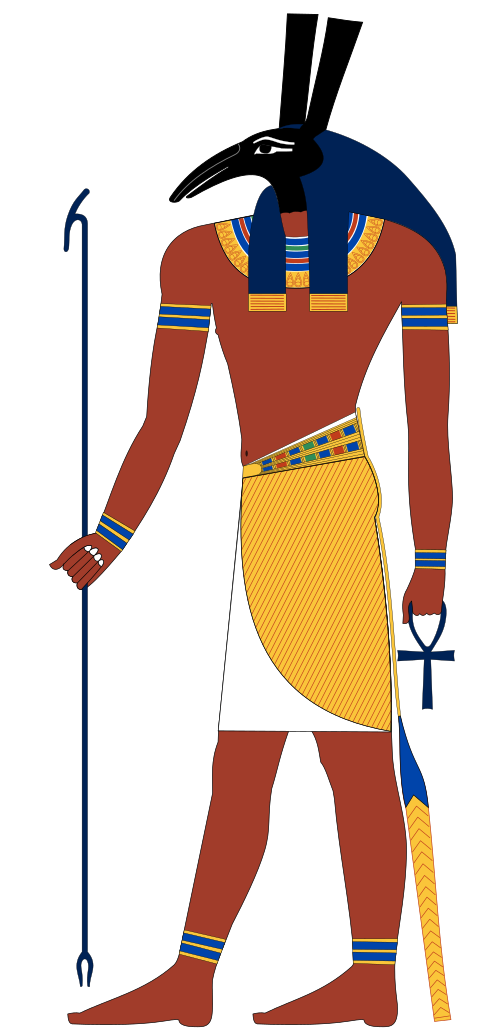
Set, brother of Osiris, assembled seventy-two conspirators and devised a plan to seize the throne. He obtained the precise measurements of Osiris's body and had a finely decorated chest constructed to those dimensions. At a feast attended by Osiris and the conspirators, Set brought out the chest and offered it as a gift to whoever lay inside and fit it exactly. One by one the guests tried and none fit. When Osiris lay in it, Set and his conspirators sealed the lid immediately, poured lead over it, and carried it to the Nile. They cast it into the water.
The chest floated north to sea and came to rest at Byblos on the Phoenician coast. A tamarisk tree grew around it and enclosed it entirely within its trunk. The king of Byblos, admiring the size and fragrance of the tree, had it cut and set as a pillar in his palace, the body of Osiris sealed inside.
The Search of Isis
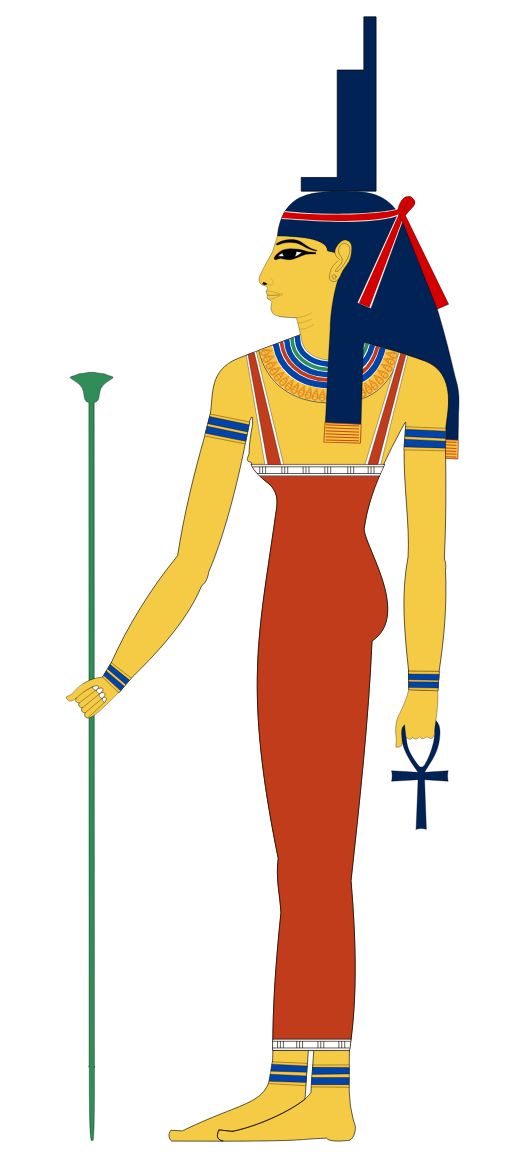
When Isis learned of her husband's death, she cut a lock of her hair, put on mourning clothes, and set out to find him. She traveled to Byblos and gained the trust of the royal household, eventually serving as nurse to the queen's infant son. She revealed her identity and asked for the pillar. The king and queen granted it. Isis cut open the wood, extracted the chest, and mourned over it. She brought it back to Egypt and concealed it in the papyrus marshes of the Delta.
Set, hunting by moonlight in the Delta, discovered the chest by chance. He opened it and, recognizing the body of Osiris, cut it into fourteen pieces and scattered them across Egypt. Some Egyptian sources give the number as sixteen; others as forty-two, one piece in each nome of Egypt.
Isis and Nephthys searched throughout Egypt for the dismembered parts. They found all of them except the phallus, which had been swallowed by an oxyrhynchus fish in the Nile. Isis fashioned a substitute from gold.
The Restoration of Osiris
Thoth provided the necessary spells for restoration. Anubis performed the first rites of mummification, binding the reassembled body. Egyptian sources treat this as the origin of embalming practice; the Coffin Texts record Anubis declaring: "I have come to be your protection." The wrappings were supplied by Neith and the four sons of Horus stood guard at the cardinal points.
Isis, taking the form of a hawk or kite, hovered over the restored body and fanned breath into it with her wings. Through this act she conceived their son Horus. The Pyramid Texts record: "Isis comes to you rejoicing for love of you. Your seed rises in her, she being ready as Sothis."
The Concealment of Horus
Isis withdrew to the marshes of Khemmis in the Delta to give birth in secret and raise Horus hidden from Set. The infant Horus was stung by a scorpion in her absence. Thoth descended with healing spells sent by Ra and restored him. Other dangers pursued the child in the marshes. Isis shielded him from each until he reached adulthood and could press his claim to the throne.
The Contendings of Horus and Set
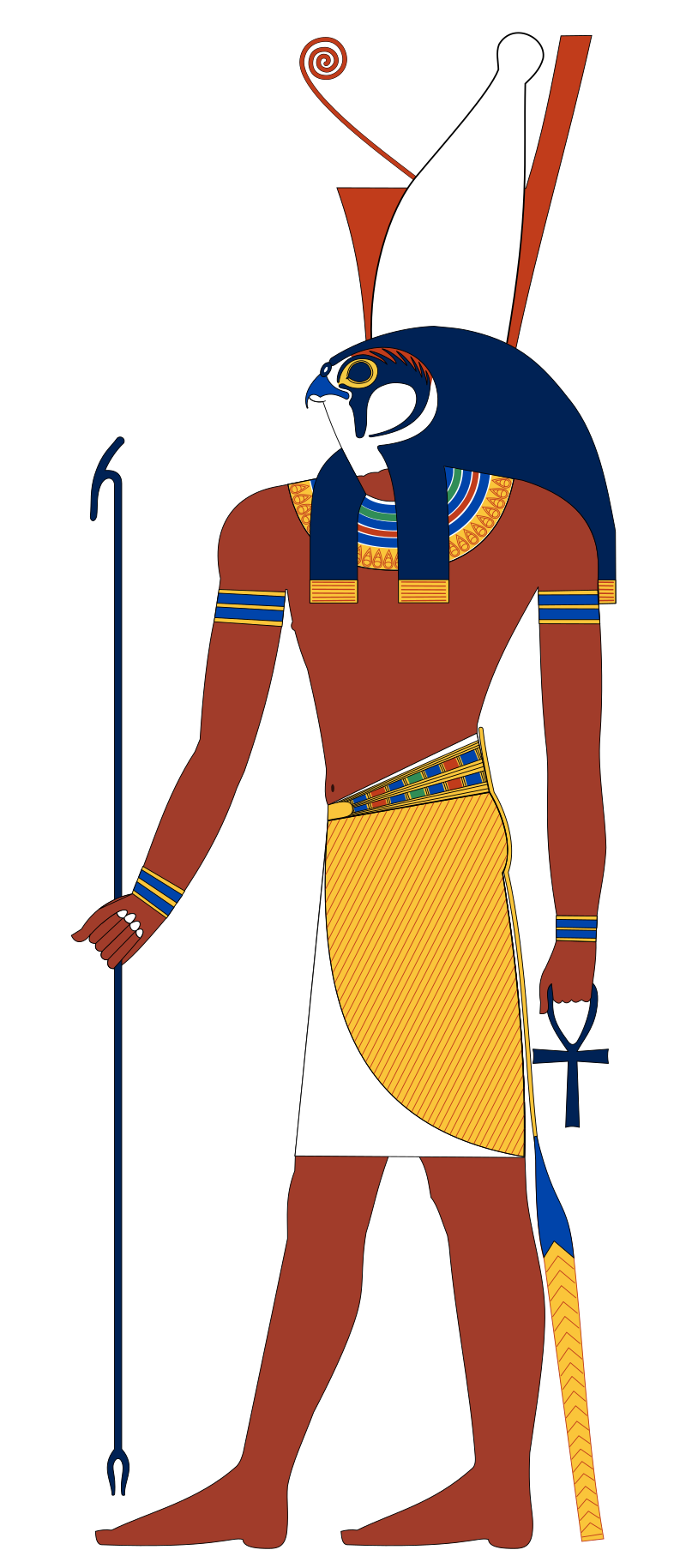
Horus appeared before the tribunal of the gods, the Ennead, to claim the throne of Egypt as the rightful heir of Osiris. Set contested the claim, arguing that rule belonged to the strongest. The dispute before the tribunal is the subject of the Papyrus Chester Beatty I (c. 1150 BCE), which records the legal proceedings in full.
During the contest, Set tore out the left eye of Horus. Horus in turn castrated Set. Thoth restored the Eye of Horus through healing spells. That eye, known as the wedjat, became a symbol of wholeness and protection reproduced throughout Egyptian art and amulet production for three thousand years.
The tribunal, presided over by Ra, initially ruled in Set's favor. Osiris, from the realm of the dead, sent a letter of protest to the tribunal. He reminded the gods that the earth's sustaining crops derived from him and warned of consequences for an unjust verdict. The tribunal reversed course and ruled in favor of Horus. He was crowned king of the living. Set was assigned dominion over the desert and storms.
The Judgment of the Dead
Osiris became the lord of the dead and the presiding judge of the Hall of Two Truths, referred to in the Pyramid Texts as the Duat. There the hearts of the deceased were weighed on a scale against the feather of Ma'at. Thoth recorded the outcome. Those whose hearts balanced with the feather passed into eternal life in the Field of Reeds. Those whose hearts were heavier were consumed by Ammit, a composite creature that destroyed the soul entirely.
The myth provided the theological basis for Egyptian funerary practice across three millennia. Every deceased person who underwent mummification was identified with Osiris and addressed as "Osiris [name]" in funerary texts. The illustrated papyri of the Book of the Dead, the painted tomb chambers, and the elaborate sarcophagi of the dynastic period all derive from the ritual logic established in the myth of his death, restoration, and rule over the dead.
Primary sources: Pyramid Texts of Unas, Saqqara (c. 2375 BCE); Coffin Texts (c. 2100-1800 BCE); Great Hymn to Osiris, Stele of Amenmose, Louvre C286 (c. 1550 BCE); Papyrus Chester Beatty I (c. 1150 BCE); Plutarch, De Iside et Osiride (c. 100 CE).